The designation of a U.S.-based AI company as a supply chain risk — a move more commonly associated with foreign security concerns — is now in front of a federal appeals court, and the outcome could redraw the boundary between Silicon Valley and the Pentagon for years.
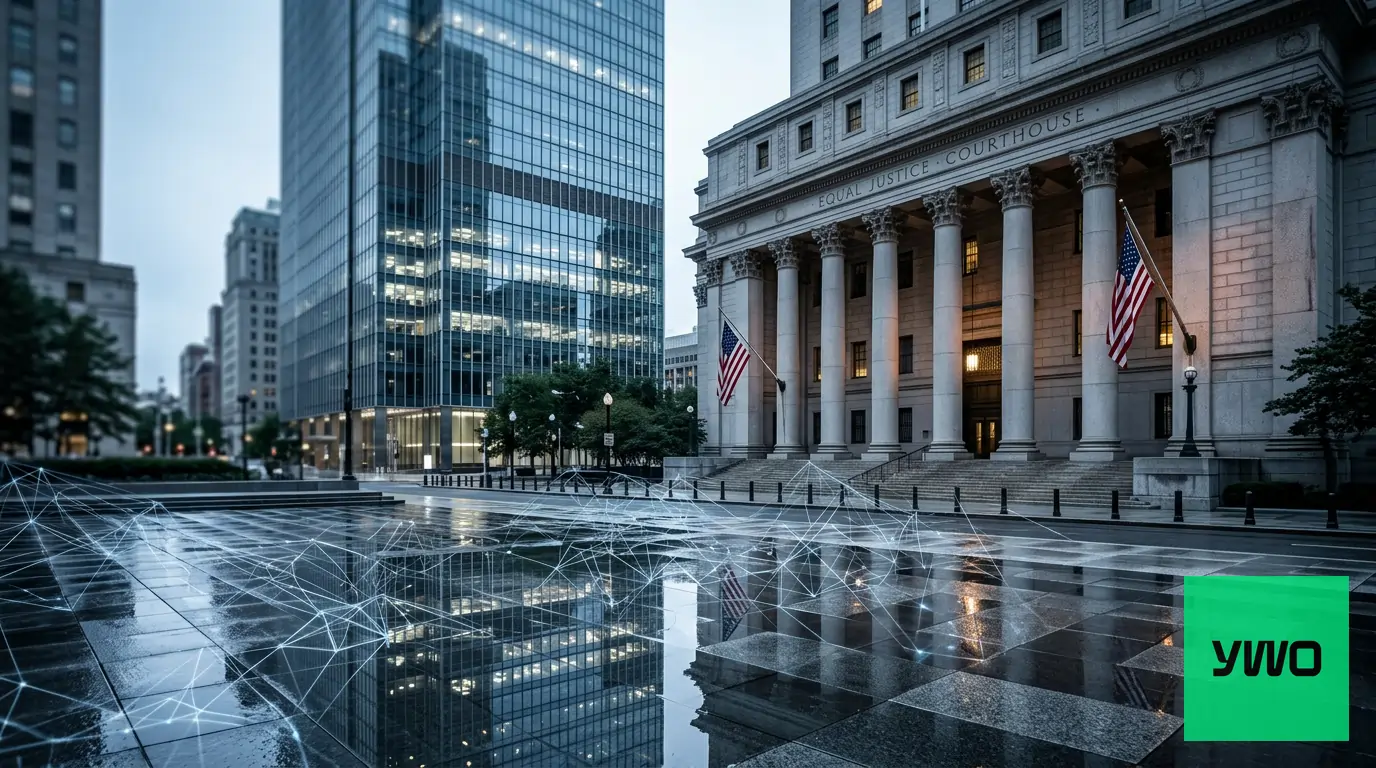
A federal appeals court in Washington, D.C., began hearing arguments this morning in Anthropic‘s lawsuit against the Department of Defense, with proceedings opening at 9:30 a.m. ET. Each side has 15 minutes before a panel of three circuit judges — Judge Karen Henderson, Judge Gregory Katsas, and Judge Neomi Rao — who will then take the matter under advisement and issue a written opinion. Reporting by Ashley Capoot at CNBC has tracked the case throughout.
The Fight Over Access and Autonomous Weapons
The dispute traces back to collapsed negotiations between Anthropic and the DoD. The Pentagon reportedly sought broad access to Anthropic’s Claude models across all lawful purposes. Anthropic sought written assurance that the technology would not be deployed for fully autonomous weapons or domestic mass surveillance. The parties were ultimately unable to reach an agreement.
Defense Secretary Pete Hegseth then blacklisted Anthropic and publicly criticized the company on social media — the kind of administrative action that the company’s lawyers are now calling constitutionally untenable.
Anthropic filed suit against Hegseth and the DoD in March after the agency formally declared it a supply chain risk, triggering a requirement that defense contractors certify they will not use Claude models in military work. Anthropic CEO Dario Amodei said at the time that the company had “no choice” but to challenge the designation in court.
The government’s legal position, laid out in its brief ahead of today’s arguments, is that Anthropic could “encode limitations” into its model — and that the ability to do so represents an “untenable national-security risk.” The DoD’s filing states that Hegseth determined Anthropic “undermined the substantial trust required to sustain the relationship,” specifically because the company could “manipulate its model to enforce its own moral and policy judgments about the military’s appropriate use of the technology.”
Anthropic’s counter-brief calls the encoding argument unsupported and says it provides “no basis” for a supply chain risk designation. Its lawyers argue that Hegseth and the DoD violated the Constitution and existing administrative procedures. Their brief puts it directly: “The Court should hold the designation unlawful.”
The company also quotes the governing statute against the government’s framing, arguing that nothing in the law supports what it calls “the Orwellian notion that an American company may be branded a potential adversary and saboteur of the U.S.”
Two Courts, One Designation — and a Preliminary Injunction Already Won
The case is split across two courtrooms because the DoD relied on two distinct legal designations to justify its supply chain risk action. In addition to the D.C. federal appeals court hearing today, Anthropic filed a separate but related suit in federal court in San Francisco. In that case, Anthropic was already granted a preliminary injunction, which currently allows government agencies other than the DoD to continue using Claude models while the litigation continues.
The D.C. court told a different story in April. The panel denied Anthropic’s request to temporarily block the designation, meaning the blacklisting remains in effect as the case unfolds. The same judges, however, agreed to expedite proceedings after finding that Anthropic “will likely suffer some irreparable harm” during the litigation — language that suggests the court is not treating the company’s commercial exposure as insignificant , even if it declined the temporary block.
That split outcome — preliminary injunction in San Francisco, expedited proceedings but no block in D.C. — reflects the legal complexity of a designation that sits at the intersection of procurement law, constitutional rights, and national security deference. Courts have historically extended broad latitude to executive branch decisions on national security grounds, which is precisely the terrain the DoD is defending.
What the Designation Means for Defense-Adjacent AI Names
The commercial stakes here extend well beyond Anthropic’s balance sheet. The supply chain risk label requires defense contractors — the Lockheed Martins, General Dynamics units, and Booz Allen Hamilton-type integrators that sit at the core of the Pentagon’s technology pipeline — to certify they are not using Claude in military work. For any contractor already running Anthropic’s models in government-facing workflows, the designation creates immediate compliance risk and potential contract liability.
That pressure is one reason this case has attracted attention across the AI sector. If the DoD’s position is upheld — that it can unilaterally brand a domestic AI company a supply chain threat in situations involving unresolved commercial disagreements — it establishes a template that could be applied to other AI providers who decline government demands over model access or usage restrictions. Conversely, an Anthropic win may constrain the executive branch’s ability to use procurement-adjacent tools as leverage in commercial negotiations, an interpretation some observers may draw from the designation
President Donald Trump told CNBC last month that a deal between the DoD and Anthropic is “possible,” which introduces another variable: the litigation could be mooted by a negotiated resolution before the three-judge panel issues its written opinion. The DoD, notably, has continued using Anthropic’s models to support military operations in Iran even while the blacklisting is in force — a detail that may be viewed as complicating the broader national security argument at the center of its legal brief.
The Realistic Counter
The government’s legal footing is not weak. National security determinations by the executive branch carry a high burden for judicial reversal, and the DoD’s argument that it cannot be compelled to rely on an AI provider that might encode limits into its own models may resonate with judges who are accustomed to deferring on procurement and security matters.
The appeals court’s refusal to block the designation in April may be a signal about how the panel is reading the balance of equities. A ruling in favour of the DoD could reinforce the government’s ability to use similar procurement-related mechanisms in future cases and force Anthropic — and the broader AI industry — to reckon with government demands on model access as a condition of doing federal business.
Risk Disclaimer: Trading CFDs involves substantial risk and may result in the loss of your invested capital. CFDs are complex instruments and come with a high risk of losing money rapidly due to leverage. You should consider whether you understand how CFDs work and whether you can afford to take the high risk of losing your money. Past performance is not indicative of future results. This content is for informational and educational purposes only and does not constitute investment advice.