Category: Stocks & Equities

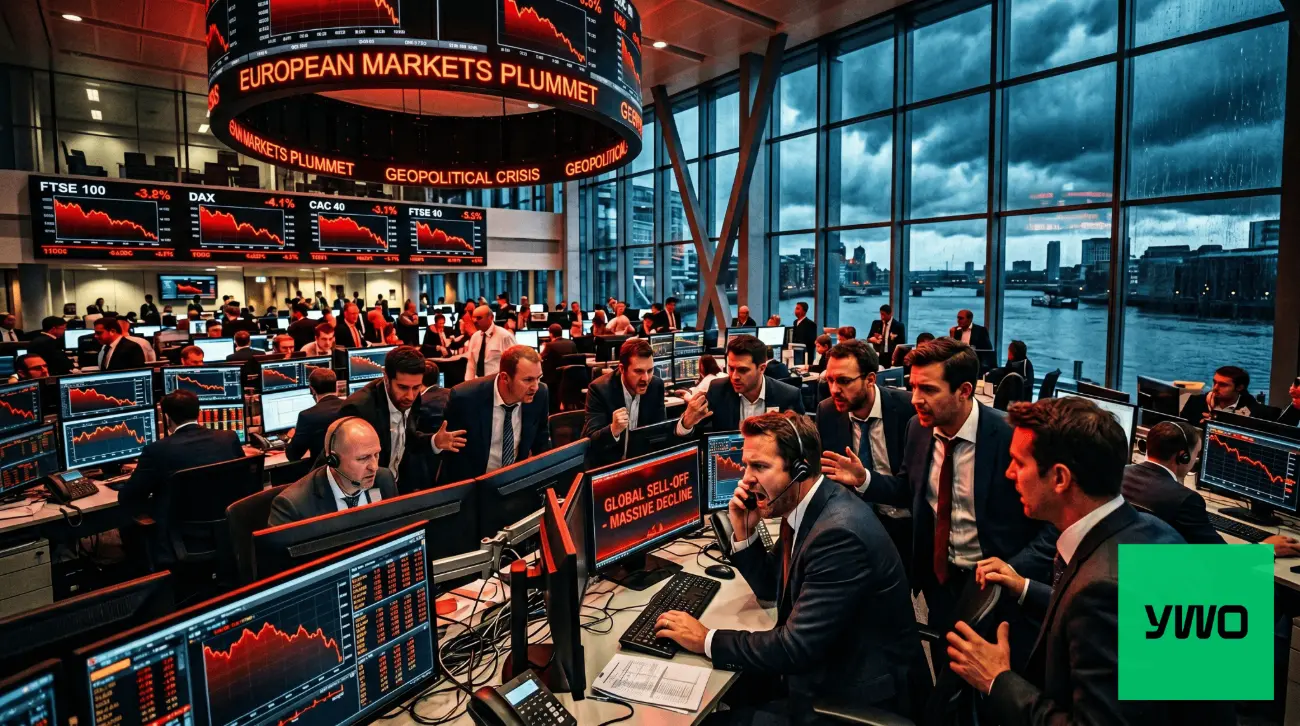
  • European Stocks Slide as Gulf Tanker Attacks Heighten Iran Tensions

    European Stocks Slide as Gulf Tanker Attacks Heighten Iran Tensions

    European equity markets moved broadly lower in Monday morning trade as renewed concerns over US-Iran hostilities weighed on investor sentiment following reported tanker attacks in the Gulf. Risk sentiment weakened  across the continent, with major benchmarks retreating as traders reassessed the potential impact of escalating geopolitical tensions on global energy supply and economic stability.


    Context

    The move appears to reflect a shift  in market positioning as participants digested reports of tanker attacks in the Gulf region, an area that handles a significant share of global oil transit. According to CNBC, the STOXX 600, FTSE 100, DAX, and CAC 40 were all trading under pressure as the session opened, with traders appearing to reassess geopolitical risk premiums across European equities.

    Analysts note that markets have historically shown sensitivity to disruptions in the Strait of Hormuz, through which a substantial portion of global crude oil passes. Any perceived threat to supply routes in the region may introduce volatility across energy-linked equities, broader indices, and safe-haven assets simultaneously. Market relationships of this kind are dynamic, however, and may change over time depending on the broader geopolitical and macroeconomic environment.

    The reported incidents have reignited concerns over a potential re-acceleration in US-Iran hostilities, a scenario that markets had shown reduced sensitivity in during recent months. According to Reuters, risk-off sentiment was evident across multiple asset classes as the European session progressed, with defensive positioning appearing to be prominent early trade.

    Both a bullish and bearish interpretation of the current environment remain plausible. On one hand, markets may price in a short-term risk premium that fades if diplomatic channels remain open and no further incidents are reported. On the other hand, a sustained escalation involving Iran — particularly one affecting energy infrastructure or shipping lanes — could extend pressure on equities and provide continued support to crude oil prices and safe-haven assets over a longer horizon.


    Key Data

    According to CNBC, the following benchmark moves were observed during Monday morning’s European session:

    • STOXX 600: Trading lower, reflecting broad-based weakness across European sectors
    • FTSE 100: Under pressure, with energy-related stocks among the more closely watched components given oil price sensitivity
    • DAX: Declining, with Germany’s export-oriented market appearing sensitive to broader risk sentiment deterioration
    • CAC 40: Softer in early trade, in line with continental peers

    Energy and defence-adjacent sectors were among the areas attracting attention, as traders assessed how prolonged regional instability might affect corporate earnings and supply chains. Financials and consumer discretionary names, which tend to be more sensitive to risk appetite, also showed weakness consistent with the broader tone.

    From a technical standpoint, TradingView data shows the STOXX 600 has historically encountered consolidation around prior support zones during episodes of geopolitical stress — though technical levels are observational references and do not reliably predict future price action.


    Market Snapshot

    AssetDirectionSession MoveSource
    STOXX 600LowerBroad declineCNBC
    FTSE 100LowerUnder pressureCNBC
    DAXLowerDecliningCNBC
    CAC 40LowerSofterCNBC
    Crude Oil (Brent)HigherRisk premium repricingReuters
    GoldHigherSafe-haven demandReuters
    EUR/USDMixedMonitoring geopolitical developmentsReuters
    US 10Y Treasury YieldLowerFlight-to-quality flows observedBloomberg

    Note: Precise percentage moves should be confirmed against live data feeds. Market relationships are dynamic and may change over time. Past correlations do not guarantee future performance.


    Events Ahead

    Traders and analysts may be monitoring the following upcoming catalysts, any of which could influence the trajectory of European equity markets this week:

    • US-Iran diplomatic developments: Any statements from Washington, Tehran, or Gulf intermediaries regarding the tanker incidents mayshift market risk sentiment materially. Developments may be tracked via Reuters and Bloomberg.
    • Crude oil market reaction: The EIA Weekly Petroleum Report and related inventory data may provide additional context for how energy markets are absorbing the geopolitical risk premium.
    • European Central Bank communications: Any ECB commentary on the growth or inflation outlook in the context of rising energy prices may attract attention. Official statements are available via the ECB Press Release page.
    • Global PMI and economic data: Macro releases scheduled for this week may interact with geopolitical risk in shaping equity moves. The Investing.com Economic Calendar provides a full schedule of upcoming releases.
    • US equity futures: The direction of Wall Street at the open may provide additional cues for European markets in the afternoon session, according to MarketWatch.

    Risk Disclaimer: Trading CFDs involves substantial risk and may result in the loss of your invested capital. CFDs are complex instruments and come with a high risk of losing money rapidly due to leverage. You should consider whether you understand how CFDs work and whether you can afford to take the high risk of losing your money. Past performance is not indicative of future results. This content is for informational and educational purposes only and does not constitute investment advice.

  • Marvell Shares Gain on Reported Google AI Chip Deal Talks

    Marvell Shares Gain on Reported Google AI Chip Deal Talks

    Shares of Marvell Technology (MRVL) rose during the session after reports emerged that the semiconductor company is in advanced discussions with Alphabet’s Google (GOOGL) to co-develop two custom artificial intelligence chips, according to Investing.com. The news lifted sentiment around Marvell as investors continue to assess the competitive landscape in custom silicon for AI workloads beyond dominant incumbent Nvidia (NVDA).


    Context

    The reported talks, if confirmed, could represent an expansion of Marvell’s footprint in the application-specific integrated circuit (ASIC) market, which has expanded in recent periods alongside enterprise and hyperscaler demand for AI infrastructure, according to Investing.com.

    Google has previously developed its own Tensor Processing Units (TPUs) in partnership with chip designers, and analysts have noted that hyperscalers are seeking custom silicon solutions to optimise performance and reduce dependency on general-purpose GPU architectures. Marvell has positioned itself as a key partner for such engagements, having previously disclosed AI-related design wins with major cloud providers, according to Reuters.

    The reported deal has been interpreted by some market participants l as a potential validation of Marvell’s custom ASIC strategy at a time when AI chip spending remains a primary focus for large technology companies. However, analysts caution that reported talks do not guarantee a finalised agreement, and the timeline and commercial terms remain unclear.

    The broader narrative around AI chip diversification has gathered momentum through 2024 and into 2025. While Nvidia retains a significant share of the GPU market for AI training and inference, hyperscalers including Google, Amazon, and Microsoft have each signalled interest in reducing their reliance on a single supplier, according to Bloomberg. This dynamic has drawn sustained investor attention toward alternative semiconductor names, of which Marvell is among the more prominently positioned.

    There is, however, a bear case to consider. Custom chip development cycles tend to be lengthy and capital-intensive, and revenues from such partnerships may take multiple quarters — or years — to materialise in Marvell’s financials. Competitive pressure from other ASIC designers and the broader uncertainty around AI infrastructure spending cycles may weigh on the stock should expectations run ahead of execution, according to MarketWatch.


    Key Data

    • MRVL shares rose on the session following the report, according to Investing.com
    • GOOGL shares traded broadly in line with the wider technology sector during the session, according to Reuters
    • Marvell has previously guided for AI-related revenue to comprise a growing proportion of its data centre segment; the company’s most recent earnings release outlined continued design win momentum with hyperscaler customers
    • The Philadelphia Semiconductor Index (SOX), a commonly referenced  benchmark for the sector, has experienced  elevated volatility in recent sessions amid broader macro uncertainty, according to MarketWatch
    • MRVL has historically found a technical reference area around prior earnings-driven levels, though past price behaviour does not indicate future performance — such observations are made for informational context only

    Market Snapshot

    AssetLevelChangeSource
    MRVL (Marvell Technology)Session gainPositiveInvesting.com
    GOOGL (Alphabet)Broadly flat/mixedMarginalReuters
    Nasdaq 100 FuturesMixedReuters
    S&P 500 FuturesMixedReuters
    US 10-Year Treasury YieldSteadyReuters
    EUR/USDMarginal movesReuters
    Gold (Spot)SteadyReuters
    WTI Crude OilMixedReuters

    Note: Intraday levels are subject to change. Readers are advised to consult live data via their trading platform. Market relationships are dynamic and may change over time.


    Events Ahead

    The following scheduled events may be relevant to MRVL, GOOGL, and broader technology and equity market sentiment. These are presented as items to monitor — outcomes remain uncertain:

    • US Economic Data Releases — Macro data including employment, inflation, and GDP figures may influence technology sector valuations and broader risk appetite; calendar available via Investing.com Economic Calendar
    • Federal Reserve Communications — Any statements or minutes from Federal Reserve officials could affect rate expectations and technology sector multiples; schedule available at Federal Reserve Events Calendar
    • Marvell Technology Earnings — Marvell’s next scheduled earnings release will be a key opportunity for management to address the reported Google talks and provide updated AI revenue guidance; investors may watch for confirmation or clarification of any partnership developments
    • Alphabet (GOOGL) Earnings — Alphabet’s quarterly results could offer insight into AI infrastructure spending plans and any commentary on custom chip strategy, relevant to the reported Marvell discussions
    • Broader Semiconductor Sector Developments — Updates from Nvidia, AMD, Broadcom, and other sector participants may influence sentiment toward AI chip suppliers broadly, according to CNBC

    Risk Disclaimer: Trading CFDs involves substantial risk and may result in the loss of your invested capital. CFDs are complex instruments and come with a high risk of losing money rapidly due to leverage. You should consider whether you understand how CFDs work and whether you can afford to take the high risk of losing your money. Past performance is not indicative of future results. This content is for informational and educational purposes only and does not constitute investment advice.

  • Nikkei and KOSPI Rise Over 1% on Ceasefire Talk Reports

    Nikkei and KOSPI Rise Over 1% on Ceasefire Talk Reports

    Japan’s Nikkei 225 and South Korea’s KOSPI each advanced more than 1% during Monday’s Asian session after weekend reports suggested the United States and Iran may be engaged in preliminary ceasefire discussions, according to Investing.com. The gains reflected a broad shift toward risk-on positioning across regional equity markets following the diplomatic signals.


    Context

    Asian equities entered the week with investors cautiously positioned, following a period of escalatory rhetoric from U.S. President Donald Trump regarding Iran, CNBC reported. The weekend reports of potential ceasefire discussions appeared to ease some of that geopolitical tension, prompting a reassessment of near-term risk across the region.

    The moves in Tokyo and Seoul may reflect broader relief that diplomatic channels remain open, though analysts note that the situation remains fluid. Geopolitical developments of this nature tend to generate short-term sentiment shifts, and market participants are likely to monitor subsequent official statements closely before drawing firmer conclusions about the trajectory of U.S.-Iran relations.

    From a regional perspective, both Japan and South Korea maintain significant economic exposure to Middle East stability. Energy import dependency in both countries means that any reduction in perceived supply-chain risk could influence near-term sentiment, though market relationships are dynamic and may change over time. Past correlations between geopolitical events and equity performance do not guarantee future outcomes.

    Bear-case considerations remain relevant. Ceasefire talk reports have not been confirmed through official diplomatic channels as of Monday’s open, and traders may reprice if subsequent statements suggest the reports were premature or mischaracterised. Additionally, broader macroeconomic headwinds — including ongoing uncertainty around U.S. trade policy and global growth forecasts — have not been resolved, according to Reuters.


    Key Data

    • Nikkei 225 (NKY): Rose more than 1% during Monday’s Asian session, according to Investing.com
    • KOSPI: Also gained more than 1% in the same session, per Investing.com
    • The iShares MSCI Japan ETF (EWJ) and iShares MSCI South Korea ETF (EWY) are the primary exchange-traded instruments tracking these markets for international participants, according to Bloomberg
    • Broader Asian equity indices also moved higher, reflecting a region-wide shift in sentiment, CNBC noted

    From a technical standpoint, the Nikkei 225 has historically encountered areas of interest around prior consolidation zones established earlier in the year. These levels are observational in nature and do not constitute forward-looking signals. The KOSPI similarly has historically found reference points at round-number levels that market participants tend to monitor.


    Market Snapshot

    AssetLevelChangeSource
    Nikkei 225 (NKY)+1%+Investing.com
    KOSPI+1%+Investing.com
    Crude Oil (WTI)DeclinedCNBC
    EWJ (iShares MSCI Japan ETF)Tracking higherBloomberg
    EWY (iShares MSCI South Korea ETF)Tracking higherBloomberg
    USD/JPYUnder watchReuters

    Note: Specific intraday price levels were not confirmed at time of publication. Readers are encouraged to verify current quotes via their trading platform or a live market data provider such as TradingView.

    Crude oil futures moved lower on Monday, consistent with the reduced geopolitical risk premium that ceasefire reports may have introduced, according to CNBC. Market relationships between geopolitical developments and energy prices are dynamic and may change over time; this movement should not be interpreted as a directional signal.

    The Japanese yen, which has historically attracted safe-haven flows during periods of elevated uncertainty, may come under scrutiny as sentiment shifts. USD/JPY is among the currency pairs traders are watching for any repositioning, though analysts caution that multiple factors influence yen valuation beyond geopolitics alone, per Reuters.


    Events Ahead

    The following developments may influence sentiment in the near term. Traders are encouraged to monitor official communications as they emerge:

    • U.S.-Iran diplomatic developments: Any official confirmation or denial of ceasefire talks could prompt further repositioning in Asian equities and energy markets. No official calendar date; monitor newswires continuously
    • U.S. trade policy updates: Ongoing tariff-related announcements from the Trump administration remain a key uncertainty for regional exporters in Japan and South Korea, per CNBC
    • Bank of Japan communications: Any scheduled remarks from BOJ officials could influence USD/JPY and by extension Nikkei-sensitive positioning, according to the Bank of Japan
    • Global economic data releases: Investors should monitor the Investing.com Economic Calendar for upcoming U.S. and regional data points, including any inflation or employment figures that could affect risk appetite
    • EWJ and EWY ETF flows: Secondary indicators of institutional positioning in Japanese and Korean equities; available via Bloomberg

    Risk Disclaimer: Trading CFDs involves substantial risk and may result in the loss of your invested capital. CFDs are complex instruments and come with a high risk of losing money rapidly due to leverage. You should consider whether you understand how CFDs work and whether you can afford to take the high risk of losing your money. Past performance is not indicative of future results. This content is for informational and educational purposes only and does not constitute investment advice.

  • Australia’s S&P/ASX 200 Closes Down 1.06% Amid Heightened Iran Tensions

    Australia’s S&P/ASX 200 Closes Down 1.06% Amid Heightened Iran Tensions

    Australian equities declined on Tuesday, with the S&P/ASX 200 (XJO) closing 1.06% lower as escalating geopolitical tensions centred on Iran weighed on risk appetite across Asia-Pacific markets, according to Investing.com.


    Context

    The session’s decline reflects the broader sensitivity of Asia-Pacific equity markets to Middle East geopolitical developments. Risk-off sentiment intensified following remarks by former U.S. President Donald Trump regarding the ongoing Iran conflict, which contributed to a regional sell-off, according to Investing.com.

    Analysts note that geopolitical escalation in the Middle East has historically weighed on equity markets through multiple channels, including energy price volatility, safe-haven capital rotation, and broader uncertainty around global trade flows. Market relationships are dynamic and may change over time, and past correlations do not guarantee future performance.

    Market participants appear to be reassessing regional risk exposure, with the Australian benchmark tracking broader Asian losses. Energy and materials sectors — which carry significant weight in the ASX 200 — may face particular scrutiny as oil price dynamics shift in response to Middle East developments, according to Reuters.

    Bullish observers may argue that any geopolitical-driven sell-off could represent a mean-reversion opportunity if tensions de-escalate. Bears, however, may point to the risk of prolonged conflict and its potential to sustain elevated commodity price volatility and dampen business confidence across the region.


    Key Data

    • S&P/ASX 200 (XJO): Closed down 1.06% on the session, per Investing.com
    • The index’s decline was broad-based, consistent with risk-off positioning observed across Asian equity markets
    • The 1.06% move places the session among the more notable single-day declines in recent weeks for Australian equities
    • Key technical levels on the XJO are being monitored by traders as observational reference points; the index has historically encountered support and resistance at prior consolidation zones

    Market Snapshot

    AssetChangeNotesSource
    S&P/ASX 200 (XJO)-1.06%Risk-off close; geopolitical pressureInvesting.com
    Asia-Pacific Equities (Broad)LowerRegional sell-off notedReuters
    Oil (Crude)VolatileMiddle East tensions may influence crude pricingReuters
    Gold (XAU/USD)Potentially supportedSafe-haven demand tends to rise during geopolitical stressReuters
    AUD/USDUnder pressureRisk-off environments have historically weighed on the Australian dollarReuters
    U.S. Equity FuturesMixedMonitoring Iran developments and diplomatic signalsCNBC

    Note: Market relationships are dynamic and may change over time. The above observations reflect general historical tendencies and do not constitute predictive analysis.


    Events Ahead

    Traders and analysts may be watching the following upcoming catalysts for potential market impact:

    • Middle East diplomatic developments — Any shift in the Iran conflict trajectory, including ceasefire signals or escalation, may influence risk sentiment across Asia-Pacific markets; monitor Reuters for updates
    • U.S. political commentary — Further statements from U.S. political figures regarding Iran policy could affect risk appetite; CNBC and Bloomberg are tracking developments
    • Australian economic data releases — Domestic macro data may provide additional context for RBA policy expectations; upcoming releases are listed on the Investing.com Economic Calendar
    • RBA communications — Any guidance from the Reserve Bank of Australia regarding monetary policy could influence the direction of the AUD and domestic equities; monitor the RBA for official releases
    • Global oil inventory data — Energy sector pricing, which may affect ASX-listed resources stocks, can be tracked via the EIA

    Risk Disclaimer: Trading CFDs involves substantial risk and may result in the loss of your invested capital. CFDs are complex instruments and come with a high risk of losing money rapidly due to leverage. You should consider whether you understand how CFDs work and whether you can afford to take the high risk of losing your money. Past performance is not indicative of future results. This content is for informational and educational purposes only and does not constitute investment advice.

  • Beijing’s Manus Review Unsettles China Tech Founders and Investors

    Beijing’s Manus Review Unsettles China Tech Founders and Investors

    Beijing’s regulatory scrutiny of the Meta-backed Manus AI project has rattled Chinese technology founders and venture capitalists, reigniting concerns about cross-border investment structures and regulatory exposure across the sector.

    Shares in China-linked technology names including Alibaba (BABA) and Baidu (BIDU) came under renewed pressure as market participants assessed the implications, according to CNBC.


    Context

    According to CNBC, Beijing’s review of Manus AI has exposed what industry participants describe as a “Singapore-washing” model — a structure in which Chinese tech ventures formally incorporated offshore, particularly in Singapore, in an effort to reduce visibility to domestic regulators. The intervention has created uncertainty among founders and investors who had been relying on this approach.

    The review is also reported to be accelerating so-called “China shedding” strategies among venture capital firms, as fund managers seek to reduce portfolio exposure to Chinese regulatory risk. Market participants are interpreting this development as a signal that offshore incorporation structures may offer limited insulation from Beijing’s oversight, particularly where underlying technology or founding teams retain material Chinese connections.

    Meta (META), which had exposure to Manus through investment activity, faces indirect scrutiny as a result of the review. Analysts note that the episode may weigh on sentiment toward US technology companies with China-linked partnerships or joint ventures, though the direct financial impact on META remains unclear at this stage.


    Key Data

    Investors are monitoring the following focal points, per Reuters:

    • BABA has historically traded with sensitivity to shifts in China’s technology regulatory environment; the stock may face continued near-term pressure should the review broaden in scope.
    • BIDU, as a leading domestic AI developer, could face scrutiny if Beijing’s review signals a wider reassessment of AI governance frameworks.
    • META‘s exposure appears indirect; however, analysts suggest that sentiment toward US-China technology linkages may weigh on broader valuation multiples.

    Market relationships between regulatory headlines and equity price movements are dynamic and may change over time. Past correlations do not guarantee future performance.


    Market Snapshot

    AssetLevelChangeSource
    META (US)Under reviewReuters
    BABA (HK/US)Negative pressureReuters
    BIDU (US)Negative pressureReuters
    Nasdaq 100 FuturesMixedReuters
    USD/CNHWatch for volatilityReuters
    Hang Seng Tech IndexMonitoringBloomberg

    Note: Real-time price data should be verified via live market feeds. Levels above reflect directional sentiment as of publication.


    Events Ahead

    Investors and analysts may watch the following developments for further market-moving signals:

    • Beijing regulatory announcements — Any formal guidance on AI governance or offshore structuring rules could materially affect sentiment toward China-linked technology names; monitor the Reuters markets page for updates.
    • Meta investor communications — Management commentary on China exposure and partnerships will be closely watched; check CNBC for coverage.
    • US-China technology policy developments — Broader geopolitical signals around technology decoupling may influence sector sentiment; the Investing.com economic calendar provides a schedule of relevant policy events.
    • Venture capital disclosure updates — Market participants will monitor whether major VC firms publicly disclose “China shedding” activity, which could affect valuations of China-exposed portfolio companies; see Bloomberg for ongoing coverage.

    Risk Disclaimer: Trading CFDs involves substantial risk and may result in the loss of your invested capital. CFDs are complex instruments and come with a high risk of losing money rapidly due to leverage. You should consider whether you understand how CFDs work and whether you can afford to take the high risk of losing your money. Past performance is not indicative of future results. This content is for informational and educational purposes only and does not constitute investment advice.

  • Consumer Staples vs. Discretionary: Rotating Sectors in Q1

    Consumer Staples vs. Discretionary: Rotating Sectors in Q1

    The stock market is a bit like a massive, constantly shifting cocktail party. For the last few years, all the attention has been focused on the technology sector, the loud, charismatic guest telling everyone about Artificial Intelligence. But as we move through the first quarter of 2026, it appears some attendees are quietly slipping away to grab a coffee with a much less glamorous crowd: the Consumer Staples sector.

    At the same time, the Consumer Discretionary Sector, the group that sells the things we want but do not necessarily need, is finding it harder to keep a crowd entertained.

    This movement of capital from one area of the market to another is known as “sector rotation.” It is a fundamental mechanic of investing, often associated with shifts in how different market participants assess the underlying health of the economy.. In early 2026, there are indications of divergence between these two consumer-facing sectors, presenting an interesting opportunity to understand how macroeconomic winds steer investment flows.

    Defining the Contenders

    To understand the rotation, one must first define the sectors. They represent two fundamentally different aspects of the human experience: surviving and thriving.

    Consumer Staples (The Essentials)
    This sector includes companies that sell the goods people buy, regardless of how the economy is doing. It comprises food, beverages, hygiene products, and household goods. Companies like Procter and Gamble, Coca-Cola, and Costco live here. These are defensive stocks. They are relatively insensitive to economic cycles because, even in a recession, people still need toothpaste and groceries.

    Consumer Discretionary (The Wants)
    This sector is the fun one. It includes companies selling non-essential goods and services. We are talking about luxury apparel, automobiles, leisure travel, and high-end electronics. Amazon and Tesla are the heavyweights in this category. These are cyclical stocks. When the economy is strong and consumer confidence is higher, demand for these goods and services may increase.  When times get tough, purchases in this category are often reduced or delayed.

    The Tale of the Tape: A Historic Q1 Divergence

    The first quarter of 2026 has seen a shift in sector performance compared to recent trends.. Following a year where technology and growth stocks dominated, the defensive Consumer Staples sector has gained increased attention.

    Through the first thirty trading days of 2026, the consumer staples sector recorded a gain of over 15 percent. To put that in perspective, market analysts have noted that this is the best start to a year for staples since at least 1990. The Consumer Staples Select Sector SPDR Fund (XLP) has seen some of its strongest early-year performance in over a decade.

    Meanwhile, the Consumer Discretionary sector has struggled to maintain its footing. Over the same early period in 2026, the sector declined by approximately 5 percent. This resulted in a notable performance gap between the two sectors.​

    Unpacking the Rotation: Why the Shift?

    What factors may be contributing to increased interest in defensive sectors compared to more cyclical ones?The rotation can be attributed to a confluence of macroeconomic factors, specific company dynamics, and a general desire to manage risk.

    1. The Defensive De Risking Strategy

    One factor that may be contributing to the rotation is a shift toward more defensive positioning. After massive runs in technology and growth stocks, there are indications that some market participants are reducing exposure. They are looking for stability in an environment where inflation and interest rate trajectories remain complex.​

    Consumer staples  are often considered more defensive in nature. These companies are often associated with dividend distributions and the ability to adjust pricing under certain conditions When inflation pushes up the cost of raw materials, consumer staples companies are generally able to pass those costs onto the consumer because the demand for their products is inelastic. You might complain about the price of milk, but you still buy it.​

    2. Discretionary Headwinds

    On the other side of the coin, the Consumer Discretionary sector is facing a range of challenges. While overall retail spending has not collapsed, there are signs that consumers, particularly those in the middle and lower income brackets, are becoming more selective.​

    When budgets are squeezed by the lingering effects of inflation, consumers often cut back on physical goods like apparel and electronics. While spending on “experiences” like travel has remained somewhat resilient, the broader discretionary sector is highly exposed to any wavering in consumer confidence.

    Furthermore, the performance of the consumer discretionary index is heavily skewed by its largest components. Recent declines in mega-cap companies like Amazon and Tesla have disproportionately dragged down the overall sector average. Given their weighting, movements in large-cap companies can have a significant influence on overall index performance

    3. The Mean Reversion Argument

    There is also a mathematical argument for the rotation. In 2025, consumer staples widely underperformed the broader market as investors chased the AI narrative. By the start of 2026, some analysts viewed the staples sector as relatively lower compared to the elevated valuations of technology and discretionary stocks.

    The market often acts like a pendulum, swinging from overvalued sectors to undervalued ones. This process, known as mean reversion, suggests that the rotation into staples is partly driven by investors hunting for bargains in a sector that was previously ignored.​

    The Outlook: Evaluating the Rest of the Year

    As the year progresses, the sustainability of this rotation will depend heavily on the broader economic picture.

    If the global economy experiences a “soft landing” and consumer confidence improves, the current headwinds facing the Consumer Discretionary sector could ease. Some market observers anticipate that fiscal stimulus packages and potential interest rate reductions could provide a boost to middle-income consumers, potentially reigniting discretionary spending later in the year.

    Conversely, if economic growth slows more than anticipated, the defensive qualities of the Consumer Staples sector may continue  continue to attract capital. The sector is may benefit from a normalization of supply chains and stabilizing input costs, which could improve profit margins.​

    Conclusion: The Wisdom of Diversification

    The sharp divergence between Consumer Staples and Consumer Discretionary in Q1 2026 serves as a practical lesson in market mechanics. It illustrates how capital flows from risk-seeking environments to risk-averse environments based on subtle shifts in economic perception.

    For the market participant, observing these rotations can provide useful context for understanding market behaviour. Market relationships are dynamic and may change over time, and an approach  that relies solely on one sector is inherently vulnerable to these shifts. The rapid outperformance of staples reminds us that even the most unglamorous areas of the market have their day in the sun, usually exactly when the crowd least expects it.

    Final Reminder. Risk Never Sleeps: Trading involves risk and may not be suitable for all investors. This content is for educational and informational purposes only and does not constitute investment advice or a recommendation.

  • SpaceX IPO Filing Reportedly Imminent, Targeting $75 Billion Raise

    SpaceX IPO Filing Reportedly Imminent, Targeting $75 Billion Raise

    Shares of space-sector equities moved higher in premarket trading on reports that SpaceX is preparing to file for an initial public offering that could raise more than $75 billion, according to The Information, as reported by MarketWatch at 13:19 UTC. If completed at the reported target size, the offering would rank among the largest IPOs in market history.


    Context

    According to MarketWatch, the reported filing has drawn significant market attention given SpaceX’s scale and the relatively limited number of publicly traded pure-play space companies available to investors.

    A SpaceX public listing, if it proceeds as reported, could materially reshape how institutional and retail capital is allocated across the broader space sector. Market participants appear to be reassessing the relative value of existing listed space-sector equities, as a liquid, large-cap SpaceX vehicle might alter demand dynamics for smaller peers. Analysts have noted that outcomes of this nature tend to generate both rotation opportunities and valuation recalibration across adjacent names, though market relationships are dynamic and may change over time.

    The reported raise would value SpaceX at a scale comparable to some of the largest technology companies, according to Bloomberg, which has previously reported SpaceX valuations in the range of $350 billion based on secondary market transactions and tender offers. Past valuation benchmarks from private transactions do not guarantee any future public market pricing.


    Key Data

    • Reported IPO raise target: More than $75 billion, per The Information via MarketWatch
    • EchoStar (SATS): Moved higher in premarket trading following the report, per MarketWatch
    • Rocket Lab USA (RKLB): Among space-sector equities noted for premarket movement, per MarketWatch
    • Iridium Communications (IRDM): Listed among related equities under observation, per MarketWatch
    • Astra Space (ASTR): Also tracked in the premarket session, per MarketWatch

    Current intraday price levels for the above equities may be tracked via Investing.com and Bloomberg Markets.


    Market Snapshot

    AssetLevelChangeSource
    SATS (EchoStar)Premarket upPositiveMarketWatch
    RKLB (Rocket Lab)Premarket upPositiveMarketWatch
    IRDM (Iridium)Under watchTBCInvesting.com
    ASTR (Astra Space)Under watchTBCInvesting.com
    S&P 500 FuturesLive dataTBCCME Group
    Nasdaq 100 FuturesLive dataTBCCME Group

    Live pricing should be verified directly with data providers. Levels above reflect premarket conditions at time of reporting and may have changed.


    Bull and Bear Perspectives

    Bull case: A SpaceX listing could validate the commercial space sector at scale, potentially increasing institutional interest in the broader category. Existing listed peers may benefit from heightened investor attention toward the sector, according to analysts cited by Bloomberg.

    Bear case: A large, liquid SpaceX public vehicle might draw capital away from smaller listed space-sector names, as investors could favour the larger, more established operator. Valuation compression in adjacent equities has historically followed large-cap entrants in comparable technology sub-sectors.


    Events Ahead

    Market participants may wish to monitor the following upcoming catalysts:

    • SpaceX formal S-1 or IPO prospectus filing — timing unconfirmed; to be monitored via SEC EDGAR
    • RKLB earnings and guidance updates — schedule to be confirmed via Investing.com Earnings Calendar
    • IRDM quarterly results — schedule to be confirmed via Investing.com Earnings Calendar
    • Broader US equity market open — S&P 500 and Nasdaq reaction to the report at the cash session open, tracked via CME Group
    • Federal Reserve communications and macro data — any shifts in risk sentiment may influence growth-oriented equity sectors; calendar via Investing.com Economic Calendar

    Risk Disclaimer: Trading CFDs involves substantial risk and may result in the loss of your invested capital. CFDs are complex instruments and come with a high risk of losing money rapidly due to leverage. You should consider whether you understand how CFDs work and whether you can afford to take the high risk of losing your money. Past performance is not indicative of future results. This content is for informational and educational purposes only and does not constitute investment advice.

  • European Stocks Rise as Oil Retreats on Ceasefire Optimism

    European Stocks Rise as Oil Retreats on Ceasefire Optimism

    European equity markets moved broadly higher on Wednesday as oil prices declined amid reports of progress in ceasefire negotiations involving the United States and Iran, according to Investing.com. The softer energy price environment appeared to improve risk sentiment across the region, with major indices posting gains in mid-session trade.


    Context

    Lower crude prices have historically been viewed as a potential tailwind for energy-importing economies within the eurozone, where elevated commodity costs have weighed on growth outlooks throughout recent quarters. According to Reuters, market participants are interpreting the ceasefire developments as a factor that could ease near-term inflationary pressure on European businesses and consumers, though analysts caution that diplomatic situations remain fluid and outcomes are uncertain.

    The European Central Bank has previously flagged energy price volatility as a material risk to the region’s disinflation path, as noted in its latest economic bulletin. Any sustained reduction in energy costs could, in theory, provide some relief to that outlook — though economists warn that geopolitical situations can reverse rapidly, and markets may be pricing in an outcome that has not yet been confirmed.

    Bearish observers note that European growth fundamentals remain under pressure from weak manufacturing data, sluggish consumer demand, and ongoing uncertainty around global trade conditions, as highlighted in recent Eurostat releases. A ceasefire development alone may not be sufficient to materially alter the region’s medium-term trajectory, some analysts suggest.


    Key Data

    • The EZU (iShares MSCI Eurozone ETF) was tracking higher in Wednesday’s session, reflecting broad eurozone equity strength, per Bloomberg Markets
    • Brent Crude eased on diplomatic headlines, with price levels tracked via TradingView
    • The DAX (Germany) showed gains, with the index observed near recent range highs, according to Investing.com
    • The CAC 40 (France) also advanced, per MarketWatch
    • The FTSE 100 (UK) posted a more modest move, reflecting the index’s higher weighting of energy sector constituents, which may see earnings headwinds from lower oil prices, according to Financial Times Markets
    • The EURO STOXX 50 moved higher, with levels tracked via Euronext

    Note: Market relationships are dynamic and may change over time. Past correlations between oil prices and equity performance do not guarantee future results.


    Market Snapshot

    AssetLevelChangeSource
    DAX~24,000 areaPositiveInvesting.com
    CAC 40~7,700 areaPositiveMarketWatch
    FTSE 100~8,700 areaModest PositiveFT Markets
    EURO STOXX 50~5,300 areaPositiveEuronext
    EZU ETFNear session highsPositiveBloomberg
    Brent CrudeRetreatingNegativeTradingView
    EUR/USD~1.08–1.09 rangeModest moveReuters
    German 10Y Bund YieldWatchingMixedBloomberg

    Levels are indicative. Readers should consult live data providers for real-time pricing.


    Events Ahead

    The following upcoming events may attract market attention and could influence European equity and energy sentiment. These are observational catalysts, not predictive signals:

    • US-Iran diplomatic developments — Any updates on ceasefire negotiations may continue to influence oil price direction and, by extension, European equity sentiment; tracked via Reuters World News
    • ECB speakers — Any scheduled remarks from ECB officials could provide further context on the bank’s view of energy prices and the growth outlook; calendar available via Investing.com Economic Calendar
    • Eurozone economic data releases — Upcoming PMI, inflation, or GDP figures may offer insight into whether lower energy costs are translating into improved economic conditions; tracked via Eurostat and Investing.com
    • OPEC+ communications — Any response from OPEC+ members regarding production policy in the context of ceasefire developments could affect crude price direction; monitored via Reuters Energy
    • US CPI / Fed communications — US inflation data and Federal Reserve commentary may influence broader global risk appetite and indirectly affect European markets; scheduled dates available at CME FedWatch and Investing.com

    Risk Disclaimer: Trading CFDs involves substantial risk and may result in the loss of your invested capital. CFDs are complex instruments and come with a high risk of losing money rapidly due to leverage. You should consider whether you understand how CFDs work and whether you can afford to take the high risk of losing your money. Past performance is not indicative of future results. This content is for informational and educational purposes only and does not constitute investment advice.