Category: Trading Strategy

  • Fibonacci Analysis: 5 Common Mistakes & How to Use It Effectively

    Fibonacci Analysis: 5 Common Mistakes & How to Use It Effectively

    Fibonacci analysis is widely used in technical trading, and when applied carefully, it can offer a structured way of examining potential market levels.

    The “golden ratio”, with its ties to natural patterns, is often referenced as a framework for identifying possible areas of support and resistance in markets such as forex, indices, and commodities.

    Yet, like any potent tool, it requires careful application; missteps in Fibonacci analysis can reduce effectiveness and lead to inconsistent results.

    This guide will explore the 5 common Fibonacci errors that consistently trip up traders, from beginners to those with some experience.

    More importantly, it outlines practical approaches that may help in avoiding these pitfalls, supporting a more disciplined use of Fibonacci techniques within broader market analysis.

    The Foundation: A Quick Refresher on Fibonacci in Trading

    Before we delve into the errors, let’s briefly revisit the core principles. Fibonacci analysis is a technical analysis method that uses sequences of numbers identified by the 13th-century mathematician Leonardo Pisano, known as Fibonacci.

    What is Fibonacci and Why Traders Use It

    The Fibonacci sequence in trading is a series of numbers where each number is the sum of the two preceding ones (e.g., 0, 1, 1, 2, 3, 5, 8, 13, 21, 34…). When we derive ratios from these numbers, specific percentages emerge that are often observed in financial markets.

    Traders use these ratios to highlight potential areas of support and resistance, monitor possible price levels, and assess retracements or extensions.

    It’s a cornerstone of technical analysis, applicable across forex trading, stock market indices, and commodities in CFD trading.

    Understanding Key Retracement and Extension Levels

    The most commonly used Fibonacci retracement levels are 23.6%, 38.2%, 50%, 61.8%, and 78.6%. These levels suggest where a price pullback may potentially pause before the original trend resumes.

    For Fibonacci extension, popular levels include 127.2%, 161.8%, 200%, and 261.8%, which are often used to project potential price areas once a market moves beyond a prior high or low.

    Mistake 1: Ignoring the Overarching Trend & Market Context

    One of the most frequent common Fibonacci errors is applying Fibonacci levels in isolation, without considering the broader market direction. This is akin to navigating a ship without knowing the ocean’s currents.

    Why ‘Blind’ Fibonacci can be misleading

    A trader might identify a 61.8% retracement level on a chart, but if the market’s overarching trend is strongly bearish, that seemingly perfect level could be easily breached.

    Fibonacci analysis mistakes often stem from a lack of market context, resulting in trades that move against prevailing momentum. The market’s rhythm, driven by fundamental news or strong momentum, can easily overshadow individual indicator signals.

    Solution: Always Confirm with Macro Trend Analysis & Price Action

    The most effective way to use Fibonacci is with the trend. Always identify the dominant trend first, whether bullish or bearish, using tools like moving averages, trend lines, or higher timeframe analysis.

    Then, look for Fibonacci retracements within that trend to find potential entry points. Confirm these levels with price action trading signals, such as strong candlestick patterns or rejection from a trend line. This combined approach may improve the consistency of analysis.

    For broader perspective, integrating global economic indicators can also support trend evaluation as discussed at Bloomberg Markets.

    Mistake 2: Incorrectly Drawing Fibonacci Levels

    This might sound basic, but incorrect Fibonacci levels are a primary source of frustration. Many traders struggle with identifying the correct swing high and swing low to anchor their Fibonacci tool.

    The Critical Error of Misplaced Anchor Points

    Drawing Fibonacci retracements requires selecting a significant swing low and a significant swing high (for an uptrend pullback) or vice versa (for a downtrend pullback).

    Traders often make the mistake of picking minor fluctuations, arbitrary points, or using a range that isn’t reflective of a clear impulse move. This leads to Fibonacci retracement errors where the calculated levels are irrelevant to actual market movement.

    Solution: Master the Swing Highs and Lows with Precision

    A ‘swing high’ is typically a high point with at least two lower highs on either side. A ‘swing low’ is a low point with at least two higher lows on either side. Practice identifying these definitive pivot points on various timeframes.

    For an uptrend, draw from the swing low to the swing high. For a downtrend, draw from the swing high to the swing low. The accuracy of your anchor points plays a major role in the relevance of your Fibonacci analysis.
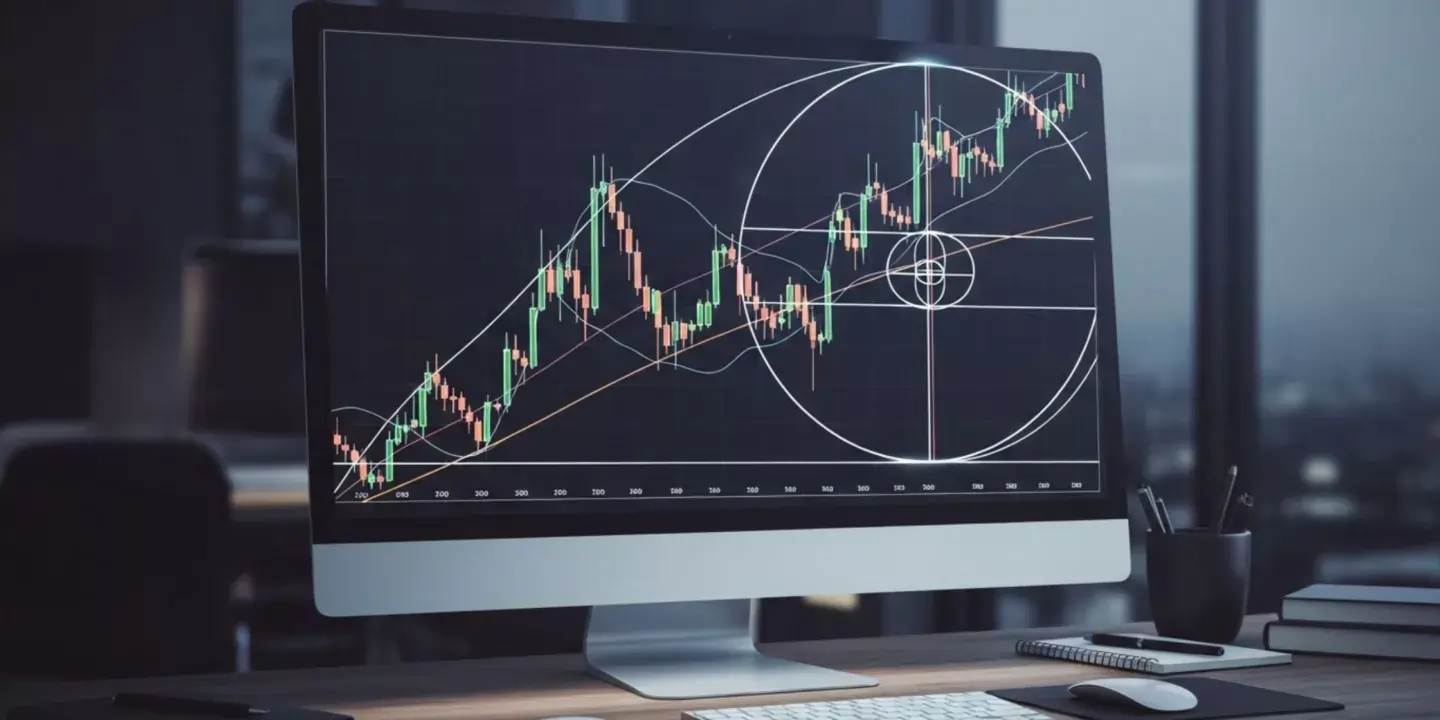
    Stock market analysis on computer screen - Fibonacci Tool

    Mistake 3: Relying Solely on Fibonacci without Confluence

    Just as a single instrument rarely forms an entire orchestra, a single indicator like Fibonacci rarely provides a complete trading signal. This is a crucial pitfall in avoiding Fibonacci pitfalls.

    The Danger of Single-Indicator Syndrome

    Many traders fall into the trap of using Fibonacci as their sole decision-making tool. They see a price hit a 61.8% retracement and immediately initiate a trade.

    However, markets are complex, influenced by multiple factors. Relying only on Fibonacci, without additional confirmation, significantly increases the risk of missed opportunities, especially during volatile conditions.

    Solution: Combine with Support/Resistance, Candlesticks, and Volume for Confirmation

    Successful trading Fibonacci effectively involves seeking confluence. This means looking for multiple technical indicators or patterns aligning at or near a Fibonacci level. For example, does a 61.8% retracement level coincide with a historical support/resistance zone?

    Is there a candlestick reversal pattern forming at that level? Is volume Fibonacci supporting the potential reversal? Combining Fibonacci with other tools can create stronger confirmation signals.

    Mistake 4: Inappropriate Timeframe Application

    The market’s fractal nature means that patterns repeat across different timeframes. However, a Fibonacci analysis valid on a daily chart will likely be meaningless on a 5-minute chart.

    Why a Daily Chart’s Fibonacci Won’t Work on a 5-Minute Chart

    Applying Fibonacci levels drawn from a broad, multi-day price move to a short-term, intraday chart is a classic Fibonacci analysis mistake.

    The underlying market drivers, participant types, and price noise differ significantly between timeframes. Fibonacci levels are most effective when applied to a timeframe consistent with your overall trading strategy and horizon.

    For instance, long-term analysis is often conducted on weekly or monthly charts, while shorter-term traders may look at 15-minute or 1-hour charts.

    Solution: Align Your Fibonacci Analysis with Your Trading Style & Timeframe

    Determine your primary trading timeframe first. Are you a swing trader holding positions for days? Focus on 4-hour or daily charts.

    Are you a scalper looking for quick trades? Use 1-minute or 5-minute charts for your time frames Fibonacci analysis, but always be aware of the higher timeframe trend. Consistency in timeframe selection supports more coherent analysis.

    [Insert Chart: Fibonacci on different timeframes showing varying validity, e.g., a Daily chart showing a clear 61.8% bounce, and a 5-minute chart showing the same Fibonacci levels being disregarded by intraday noise]

    Mistake 5: Over-Trading and Letting Emotions Dictate Fibonacci Trades

    Even with perfect analysis, trading psychology can derail a trader’s success. The desire to find a setup, or the fear of missing out (FOMO), often leads to forced Fibonacci trades.

    The Psychological Trap of Forcing Fibonacci Setups

    After diligently learning how to use Fibonacci correctly, traders can become overzealous, seeing Fibonacci setups everywhere. This often results in over-trading, where traders take lower-probability trades just because they’ve identified a Fibonacci level.

    This emotional bias, coupled with a lack of discipline, can quickly erode capital. Understanding the role of greed and fear is an important part of risk awareness in CFD trading.

    Solution: Develop a Trading Plan and Stick to Risk Management Principles

    A solid trading plan is a helpful defence against emotional trading. It should clearly define your entry criteria (including Fibonacci confluence), exit strategy, and strict risk management Fibonacci rules.

    Many traders use predefined stop-loss and take-profit levels to manage exposure. Position sizing and limiting risk on each trade are also widely emphasized as key components of long-term risk control.

    For instance, place a stop-loss just beyond a significant Fibonacci retracement level if you anticipate a bounce. Adhering to these principles is essential for long-term survival and profitability. Gain deeper insights into managing your mental game with our guide on (FOMO) Silently Wrecking Your Account.

    Learn more about risk management from financial authorities like the Financial Times.

    Advanced Strategies: Elevating Your Fibonacci Analysis

    Once you’ve understood the basics and avoided these common pitfalls, you may explore more advanced uses of Fibonacci.

    Identifying Fibonacci Clusters and Confluence Zones

    Look for areas where multiple Fibonacci levels from different price swings or different timeframes converge. These “clusters” are often monitored as stronger potential support or resistance zones.

    Integrating Fibonacci with Elliott Wave Theory for Deeper Insights

    Elliott Wave Theory postulates that markets move in predictable wave patterns driven by collective psychology. Fibonacci ratios are intrinsically linked to Elliott Wave, providing precise measurements for wave lengths and retracements.

    This combination is used by some analysts to study market structure and possible price movement scenarios.

    Leveraging Fibonacci for Precise Stop-Loss and Take-Profit Placement

    Fibonacci extension levels are excellent tools for identifying potential take-profit targets, especially in strong trends. Similarly, placing stop-losses just beyond key retracement levels can offer logical and effective risk control.

    If a significant Fibonacci level is broken, it may signal a shift in sentiment, prompting traders to reassess their analysis.

    rade setup with Fibonacci SL/TP showing an entry at a 61.8% retracement, with SL below the 78.6% and TP at 161.8% extension.

    Conclusion: Applying Fibonacci Thoughtfully

    Fibonacci analysis is commonly referenced in the technical trader’s arsenal, yet its usefulness can be limited by avoidable Fibonacci mistakes.

    By recognizing and addressing frequent errors – such as overlooking the trend, misplacing anchor points, relying on it in isolation, applying it across inconsistent timeframes, or letting emotions drive decisions – you may improve the consistency and structure of your analysis.

    Key Takeaways for Applying Fibonacci

    1. Always confirm the trend before applying Fibonacci.
    2. Use clear swing high/low identification for drawing.
    3. Seek confluence with other indicators like support/resistance and price action.
    4. Align Fibonacci with your trading timeframe.
    5. Adhere to a strict trading plan and risk management.

    With careful use, Fibonacci analysis can support a more disciplined approach within technical analysis.


    Summary/TL;DR

    • Mistake 1: Ignoring Trend. Applying Fibonacci without considering the overarching market trend can reduce reliability. Approach: confirm with macro trend analysis and price action.
    • Mistake 2: Incorrect Drawing. Misplacing anchor points for Fibonacci retracement or extension reduces relevance. Approach: Focus on identifying significant swing highs and lows with precision.
    • Mistake 3: No Confluence. Relying solely on Fibonacci signals without additional confirmation. Approach: Combine with support/resistance, candlestick patterns, and volume for stronger signals.
    • Mistake 4: Inconsistent Timeframe. Using Fibonacci levels from one timeframe on another, inconsistent timeframe. Approach: Align your Fibonacci analysis with your specific trading style and timeframe.
    • Mistake 5: Emotional Over-trading. Forcing Fibonacci setups or trading without discipline. Approach: Apply a trading plan and maintain clear risk management rules.

    A Final Word on Risk
    No indicator or trading strategy guarantees profit. Forex trading involves substantial risk, and you should never invest capital that you cannot afford to lose. 

    The Fibonacci retracement tool is a method for identifying potential opportunities, not a crystal ball. Its effectiveness is tied to a disciplined trading plan, strong risk management, and the confirmation of other indicators. 

    Every single trade you take must have a predefined stop-loss to protect your account. The market’s direction is never certain. Your risk, however, must always be defined and controlled. Your long-term success as a trader depends not on your winning trades, but on how you manage your losing ones.

     Approach every setup with this principle at the forefront of your mind.


    Frequently Asked Questions About Fibonacci Analysis

    Q: What’s the ‘Golden Ratio’ in trading, and how does it relate to Fibonacci?

    A: The ‘Golden Ratio’ is approximately 1.618 (or its inverse, 0.618), derived from the Fibonacci sequence. It appears naturally in many aspects of the universe and is sometimes referenced in financial markets.

    In trading, levels such as 61.8% retracement and 161.8% extension are based on this ratio and are widely monitored, though not guaranteed indicators

    Q: Can Fibonacci analysis predict market reversals with 100% accuracy?

    A: No. There is no technical analysis tool that can predict market reversals with 100% accuracy. Fibonacci levels are probabilities, not certainties.

    They indicate potential areas where price might react. Always use them in conjunction with other confirmation signals and a robust risk management strategy.

    Q: How often should I adjust my Fibonacci levels on a chart?

    A: Fibonacci levels are often adjusted when a new significant swing high or swing low forms, establishing a new clear impulse move.

    As the market evolves, so too should your drawn Fibonacci ranges to remain relevant to the current price action.

    Q: Are there specific market conditions where Fibonacci works best?

    A: Fibonacci analysis tends to work best in trending markets where clear impulse waves and corrective retracements are visible.

    In choppy, sideways, or highly volatile and unpredictable markets without clear trends, Fibonacci levels can be less reliable.

    Q: What other tools complement Fibonacci for CFD trading?

    A: For CFD trading, Fibonacci analysis is powerfully complemented by tools such as support and resistance levels, trend lines, moving averages, candlestick patterns, volume indicators, and momentum oscillators like the RSI or MACD.

    Combining these creates a comprehensive analytical framework.
  • Understanding Leverage and Margin in CFD Trading

    Understanding Leverage and Margin in CFD Trading

    A new trader deposits funds into his account. He feels prepared. He has followed the markets for months, read analysis, and developed a strategy. He opens his first trade on a popular currency pair, risking a small portion of his $2,000 capital. The market moves in his favour by one per cent, a solid daily move. He closes the position and looks at his profit: $20.

    He feels a sense of disappointment. At this rate, building a substantial account would take a lifetime. He wonders how other traders generate significant returns from these fractional market movements. The answer lies in two of the most fundamental concepts in CFD trading: leverage and margin.

    These tools are available to all traders, but their proper use requires knowledge and discipline. Understanding how they work together is essential for managing risk and pursuing your trading goals.

    What Are Contracts for Difference?

    Contracts for Difference, or CFDs, are financial instruments. They allow you to speculate on the price movements of assets without owning the assets themselves. When you trade a CFD on gold, for example, you do not buy physical gold. Instead, you enter a contract with a broker to exchange the difference in the asset’s price from the time you open the position to the time you close it.

    If your price prediction is correct, you make a profit. If the price moves against your prediction, you incur a loss. This structure provides flexibility for trading on both rising and falling markets. You simply buy if you expect the price to go up or sell if you expect the price to go down. The simplicity of this mechanism makes CFDs a popular choice for traders seeking exposure to a wide range of global markets, including forex, indices, commodities, and stocks.

    Understanding Leverage

    Leverage gives you the ability to control a large position with a small amount of capital. Your broker provides the remaining funds. This mechanism amplifies your market exposure. Leverage is expressed as a ratio, such as 10:1 or 30:1. A 10:1 leverage ratio means that for every $1 of your own money, you control $10 in the market.

    Consider a practical example. You have $1,000 in your trading account. You wish to open a position on a stock CFD valued at $10,000. With a leverage ratio of 10:1, you only need to put up $1,000 of your own funds. Your broker effectively lends you the other $9,000. This allows you to command a position ten times the size of your committed capital.

    The primary effect of leverage is the magnification of outcomes. If the stock price increases by 2%, your profit is calculated on the full $10,000 position. A 2% gain on $10,000 is $200. Since your own capital commitment was $1,000, this represents a 20% return on your investment. Without leverage, a 2% gain on your $1,000 would yield only $20.

    This amplification also applies to losses. If the stock price falls by 2%, your loss is also calculated on the total $10,000 position. A 2% loss is $200. This amounts to a 20% loss of your invested capital. Leverage is a double-edged sword. It increases your potential returns, but it also elevates your potential risk in equal measure. Responsible use of this tool is a cornerstone of a sound trading plan.

    The Role of Margin

    Margin is the amount of money you must deposit and hold in your account to open and maintain a leveraged trading position. This is not a fee or a transaction cost. Think of margin as a good-faith deposit. Your broker holds your margin to cover any potential losses your position might incur. The amount of margin required depends directly on the size of your trade and the leverage ratio you use.

    There are two main types of margin to be aware of.

    Initial Margin: This is the deposit required to open a position. In our previous example, to open the $10,000 position with 10:1 leverage, the initial margin required is $1,000. Your trading platform will show this amount before you confirm the trade.


    Maintenance Margin: This is the minimum amount of equity you must maintain in your account to keep your leveraged position open. Equity is the total value of your account, including the profit or loss from open positions. Brokers set a maintenance margin level, often as a percentage, to protect both you and them from excessive losses.

    If the market moves against you, your account equity will decrease. Should your equity fall below the maintenance margin level, your broker will issue a margin call. This is a notification that requires your attention.

    You either need to deposit more funds into your account to bring your equity back above the level necessary, or you must close some or all of your positions to reduce your margin requirement. If you fail to act, the broker reserves the right to close your positions to prevent further losses automatically. This process, known as a stop out, protects your account from falling into a negative balance.

    The Connection Between Leverage and Margin

    Leverage and margin have an inverse relationship. The higher the leverage you use, the lower the initial margin required to open a position of a specific size.

    This connection is mathematical and direct. Margin is calculated as a percentage of the full position size, and that percentage is the inverse of the leverage ratio. A 10:1 leverage ratio corresponds to a 10% margin requirement (1/10). A 30:1 leverage ratio corresponds to a 3.33% margin requirement (1/30).

    Let’s look at a $20,000 position in a currency pair.

    • With 10:1 leverage, the required initial margin is 10% of $20,000, which is $2,000.
    • With 30:1 leverage, the required initial margin is 3.33% of $20,000, which is approximately $667.

    The appeal of high leverage is clear. A smaller margin requirement allows you to open larger positions with the same amount of capital or to open multiple positions simultaneously. This flexibility also brings increased risk. A smaller margin deposit means your position has a smaller buffer against adverse market movements before a margin call is triggered.

    A position with lower leverage requires more upfront capital but is more resilient to market fluctuations. Your choice of leverage should always align with your risk tolerance and overall trading strategy.

    Managing Risk with Leverage and Margin

    Using these tools effectively comes down to disciplined risk management. Your primary goal is to protect your trading capital. Several strategies and tools are available to help you manage the risks associated with leveraged trading. Implementing them is a mark of a serious trader.

    Use Stop-Loss Orders

    A stop-loss order is an instruction you give your broker to automatically close a position if the price reaches a certain level. This defines your maximum acceptable loss on a trade before you even enter it. For a long (buy) position, you set a stop-loss below the entry price. For a short (sell) position, you set it above the entry price. Using a stop-loss on every leveraged trade is a fundamental risk control practice.

    Start with Low Leverage

    When you are new to trading, it is wise to use low leverage ratios or none at all. This allows you to gain experience with market movements without the amplified risk.

    As you become more comfortable and your strategies prove consistent, consider gradually increasing your leverage. Never use the maximum leverage offered by a broker simply because it is available.

    Actively Monitor Your Account

    Leveraged trading requires your attention. Keep a close watch on your open positions and your account equity. Your trading platform provides real-time data on your margin level. The margin level is calculated by dividing your account equity by your used margin, expressed as a percentage.

    A falling margin level is an early warning sign that your positions are moving against you. Active monitoring ensures you are always aware of your risk exposure, particularly during periods of high market volatility.

    Understand Your Total Exposure

    Leverage applies to each position you open. If you have multiple open positions, your total market exposure is the sum of all of them. Calculate your total exposure to ensure you are not over-leveraged across your entire portfolio.

    A common mistake for new traders is to open many small positions, not realizing their cumulative risk has become dangerously high. Prudent risk management involves seeing the complete picture of your market involvement.

  • What is a CFD and How Does it Work?

    What is a CFD and How Does it Work?

    In early 2020, global markets responded with unprecedented speed to international events. Seasoned investors watched indices like the Dow Jones Industrial Average fall thousands of points in a matter of days. Many saw their portfolios shrink. Yet, during this same period, a segment of traders found opportunities not in rising prices, but in falling ones.

    They did this without shorting stocks in the traditional sense, a complex process reserved for institutional players. Instead, they used a financial instrument designed for speculating on price movements in either direction. This instrument is a Contract for Difference, or CFD.

    It offers a distinct approach to the world’s financial markets. Understanding its function is the first step for anyone looking to engage with short-term market dynamics.

    What is a Contract for Difference?

    A Contract for Difference is a financial agreement between a trader and a broker. The two parties agree to exchange the difference in the value of a specific asset from the time the contract is opened to when it is closed. When you trade a CFD, you do not own the underlying asset. You are not buying a share of a company or a barrel of oil. You are simply speculating on the asset’s price direction.

    Think of it as a bet on price movement. If you believe the price of gold will rise, you open a ‘buy’ CFD position. If the price of gold does rise, you close your position for a profit based on the price change. If the price falls, you incur a loss. The core concept is that your profit or loss is determined by the accuracy of your prediction, multiplied by the size of your position.

    This separation from asset ownership is what makes CFD trading distinct from traditional investing.

    How CFD Trading Works

    The mechanics of a CFD trade involve a few key concepts: leverage, margin, and transaction costs. A clear understanding of this process is essential before placing any trade.

    Let’s walk through a hypothetical example. Suppose the current price of Company X stock is $100 per share. You believe the price will increase. You decide to open a CFD position to speculate on this movement.

    Leverage and Margin

    CFD trading utilises leverage, enabling you to control a large position with a relatively small amount of capital. Brokers express leverage as a ratio, such as 10:1 or 20:1. If the broker offers 10:1 leverage, it means you only need to put down 10% of the total trade value as a deposit. This deposit is called margin.

    In our example, you want to control a position equivalent to 100 shares of Company X.

    The total value of this position is 100 shares multiplied by $100 per share, which equals $10,000. With 10:1 leverage, your required margin would be 10% of $10,000, or $1,000. This $1,000 allows you to control a $10,000 position. Leverage magnifies your exposure to the market. This also means it magnifies both potential profits and potential losses.

    Going Long and Going Short

    With CFDs, you have two primary options.

    • Going Long: If you believe an asset’s price will rise, you open a ‘buy’ position. This is known as going long.
    • Going Short: If you believe an asset’s price will fall, you open a ‘sell’ position. This is known as going short.

    Since you predict Company X stock will rise, you would go long, opening a ‘buy’ position for 100 shares.

    Calculating Profit and Loss

    Your prediction proves correct. The price of Company X stock rises from $100 to $105 per share. You decide to close your position to secure the profit. The price difference is $5 per share. For your 100-share position, the total profit is $5 multiplied by 100, which equals $500.

    Now, consider the alternative. Your prediction is incorrect, and the stock price falls from $100 to $97. You decide to close the position to limit your losses. The price difference is $3 per share. Your total loss would be $3 multiplied by 100, which equals $300. These calculations do not include any associated costs.

    CFD Trading Costs

    There are two main costs to consider when trading CFDs.

    The Spread: The spread is the difference between the ‘buy’ price and the ‘sell’ price quoted by your broker. To open a ‘buy’ position, you trade at the higher price. To close it, you trade at the lower price. The position must cross this spread before it becomes profitable.

    Overnight Financing: If you keep a CFD position open overnight, you will typically incur a small fee. This fee, also known as a swap fee, reflects the cost of borrowing the capital to maintain the leveraged position. For positions on futures contracts, there are usually no overnight fees.

    Markets Available Through CFDs

    CFDs offer access to a wide range of global markets from a single platform. This is a significant feature for traders who want to diversify their activities without opening multiple accounts for different asset classes.

    ➖Indices

    You can trade CFDs on major stock market indices like the S&P 500, NASDAQ 100, and FTSE 100. This allows you to speculate on the overall health of an entire country’s stock market, not just a single company.

    ➖Forex

    The foreign exchange market is one of the most popular for CFD trading. You can trade major currency pairs like EUR/USD, GBP/USD, and USD/JPY, as well as minor and exotic pairs.

    ➖Commodities

    CFDs allow you to trade on the price movements of hard and soft commodities. This includes energy sources such as crude oil and natural gas, precious metals like gold and silver, and agricultural products like coffee and sugar.

    ➖Shares

    You can trade CFDs on thousands of individual company stocks from exchanges around the world, such as Apple, Tesla, and Amazon. This provides the opportunity to speculate on company performance without owning the shares.

    ➖Cryptocurrencies

    Many brokers now offer CFDs on popular cryptocurrencies like Bitcoin and Ethereum. This allows you to trade on their price volatility without needing a crypto wallet or dealing with a cryptocurrency exchange.

    ➖The Risks of CFD Trading

    While CFDs provide flexibility, they also carry significant risks. It is imperative that any potential trader fully understands these before committing capital. The use of leverage makes CFD trading a high-risk activity.

    ➖Market Risk

    The primary risk is that the market moves against your position. If you open a long position and the price of the asset falls, you will lose money. The more the market moves against you, the greater your loss will be. Rapid price fluctuations can result in substantial losses within a short period.

    Amplified Losses from Leverage

    Leverage is a double-edged sword. Just as it can magnify your profits, it can also magnify your losses. In the earlier example, a $1,000 margin controlled a $10,000 position. A small percentage drop in the asset’s value results in a large percentage loss relative to your margin.

    In some cases, losses can exceed your initial deposit, meaning you could owe the broker more money than you started with. Many regulated brokers offer negative balance protection to prevent this, but you must confirm this feature is in place.

    Gap Risk

    Markets can sometimes ‘gap,’ which means the price moves sharply from one level to another with no trading in between. This often happens overnight or during major news announcements.

    If a market gap happens against your position, your stop-loss order may not be executed at the desired price. It will be executed at the next available price, which could result in a much larger loss than you anticipated.

    Is CFD Trading Right for You?

    CFDs are complex instruments that carry a high risk of losing money rapidly due to leverage. They are not suitable for everyone. Generally, they are used by experienced traders who understand the risks involved. These traders often have a short-term view of the markets, looking to make trades over hours or days rather than holding investments for years.

    A person considering CFDs should have a high tolerance for risk. They must be prepared to lose their entire invested capital and potentially more. Active participation is also meaningful. Due to the fast-paced nature of leveraged trading, it is crucial to monitor your positions and the markets closely. CFDs are not a ‘set and forget’ instrument. 

    For those new to trading, starting with a demo account is a sensible way to practice and understand the mechanics without risking real money. Every trader should seek to make informed decisions based on thorough research and a solid trading plan.

  • Day Trading vs. Swing Trading: All The Information You Need to Choose

    Day Trading vs. Swing Trading: All The Information You Need to Choose

    Choosing a trading style is a critical decision. It shapes your market interaction, your daily schedule, and your risk management. The debate between swing trading and day trading is common. There is no single correct answer. The best approach depends on your personality, your available time, and your financial goals.

    This article breaks down both methodologies. It provides a clear view of what each requires. Day trading involves buying and selling assets within a single day. Swing trading means holding positions for several days or weeks to profit from price movements. Your choice will define your journey as a trader. Let us examine the details of each strategy to help you select the right fit.

    The World of Day Trading

    Day trading is a method where you open and close all trades within the same day. No position is held overnight. The goal is to accumulate small profits from many trades throughout the day. These profits compound over time. This approach demands a serious commitment.

    A day trader makes decisions based on small price fluctuations. You must watch the markets constantly during your trading session. Success depends on technical analysis, recognizing chart patterns, and understanding market momentum. You need to act quickly and without hesitation. Day trading is not a part-time activity. It is a focused profession that requires your full attention.

    Who is suited for day trading? This style fits individuals with intense discipline and decisiveness. You need to dedicate several uninterrupted hours to the screen each day. It demands a person who can handle the pressure of rapid market changes. You must manage your emotions effectively. The fast pace means you will experience both gains and losses quickly. Emotional control is essential.

    To be a day trader, you need specific tools and knowledge. You must have a deep understanding of technical indicators and chart analysis. Access to a high-quality trading platform with real-time data is non-negotiable. A fast and reliable internet connection is also fundamental. This is a high-speed environment where seconds matter.

    The Pace of Swing Trading

    Swing trading operates on a different timeline. Swing traders aim to capture larger price moves, or “swings,” than day traders. These trades last from a couple of days to several weeks. Unlike day trading, holding positions overnight is a core part of the strategy. This extended timeframe changes the entire approach.

    Swing traders spend less time monitoring the markets minute-by-minute. Instead, they focus on analyzing daily or four-hour charts to identify potential trends. The goal is to enter a trade and let it develop over time.

    This method combines technical analysis to pinpoint entry and exit points with fundamental analysis. Understanding the bigger economic picture helps a swing trader to stay with a trend.

    This style is often a better fit for people with other commitments, like a full-time job. You can analyze charts and place orders outside of market hours. The primary skill here is patience. You must be comfortable holding a position through periods of market volatility. You need confidence in your analysis to avoid closing a trade too early.

    The requirements for swing trading are different from day trading. Patience is the most important quality. You need the discipline to let your trades work. You must also accept overnight risk. The market can move against you while you are asleep due to news or events in other time zones. To manage this, swing traders use wider stop-loss orders.

    This means you need sufficient capital to allow your trades room to move without being stopped out prematurely. A solid grasp of both technical and fundamental factors is also necessary for making informed decisions.

    A Direct Comparison: Key Differences

    Understanding the core distinctions between day trading and swing trading helps clarify which path to take. Each factor presents a trade-off. Your personal preferences and circumstances will guide your decision. Let’s compare them directly across several key areas.

    Time Commitment
    Day trading is a full-time job. It requires you to be at your trading desk for several hours every day, focused on the market’s every move. Swing trading demands far less screen time. You might spend a few hours per week analyzing charts and managing your positions. This makes it accessible to people who cannot commit their entire day to trading.

    Trading Frequency
    A day trader executes numerous trades daily. The strategy is built on high volume and small gains. A swing trader is more selective. You might only take a few trades per week or even per month. Each trade is chosen to capture a significant price swing. The focus is on the quality of the setup, not the quantity of trades.

    Risk Exposure
    Day traders close all positions before the market closes. This eliminates the risk of overnight news causing a large price gap at the next open. Your risk is confined to the trading day. Swing traders accept overnight and weekend risk. A political event or economic data release can cause the market to open far from its previous close. This exposure requires careful risk management and appropriate position sizing.

    Psychological Demands
    The mental skills for each style differ. Day trading requires intense focus, fast decision-making, and the ability to handle stress. You must remain composed while managing multiple positions in a fast-moving environment. Swing trading demands patience and emotional discipline. You must trust your analysis and resist the urge to constantly tinker with your trades. You also need the conviction to hold positions through minor pullbacks.

    Building Your Trading Plan

    Once you have an idea of which style suits you, the next step is to build a trading plan. A plan is a set of rules that governs your trading decisions. It is your guide for navigating the markets. It should be written down and followed without deviation.

    For a day trader, your plan must be precise. Define your exact entry and exit criteria. Specify the market conditions you will trade and the ones you will avoid. Your risk management rules are critical. Determine the maximum amount you will risk per trade and per day. A daily routine is helpful. This includes pre-market analysis, your trading session, and a post-market review of your performance.

    For a swing trader, your plan focuses on a wider timeframe. It should detail how you identify major trends and turning points. Define your criteria for entering a trade based on daily or weekly chart patterns. Your stop-loss and profit targets will be larger to account for bigger price swings. A trade journal is vital. Use it to document your reasons for each trade and review your decisions. This helps refine your strategy over time.

    Choosing Your Path

    The right trading strategy aligns with your life. There is no universally “better” style. Day trading offers a fast-paced environment with immediate feedback. Swing trading provides a more flexible approach that fits around other responsibilities. Both require education, practice, and a disciplined mindset.

    Analyze your own personality, risk tolerance, and available time. Be honest with your self-assessment. This is the first step toward building a sustainable trading career. Remember that all trading involves substantial risk. You should understand the risks before committing capital. Past performance does not guarantee future results. Choose your path, create your plan, and commit to disciplined execution.

  • The Forex Trader’s Guide to Fibonacci Retracement

    The Forex Trader’s Guide to Fibonacci Retracement

    Successful trading demands a plan. A robust strategy provides structure, defines entry and exit points, and manages risk. Without one, you are navigating the markets without a compass. The Fibonacci retracement tool is a cornerstone of technical analysis for countless traders around the world. It offers a method for identifying potential price reversals. 

    This guide gives you a direct, actionable framework for incorporating this tool into your Forex Trading. We will dissect how it works, how to apply it, and how to build a complete trading methodology around it. Your goal is to move from theory to confident execution. This article shows you how.

    Understanding Fibonacci Retracement

    The Fibonacci tool is based on a mathematical sequence identified by Leonardo of Pisa in the 13th century. In the sequence, each number is the sum of the two preceding ones: 0, 1, 1, 2, 3, 5, 8, 13, 21, and so on. The magic for traders comes from the ratios derived from these numbers. After the sequence gets going, dividing one number by the next number yields a ratio of approximately 0.618, or 61.8%. This is known as the Golden Ratio.

    From these numbers, we derive the key Fibonacci retracement levels used in trading:

    • 23.6%
    • 38.2%
    • 50.0%
    • 61.8%
    • 78.6%

    The core idea is simple. After a significant price move in one direction, the price will often pull back or retrace a portion of that move before continuing in the original direction. Fibonacci levels highlight potential areas where this pullback might stop and the trend might resume. 

    These levels function as potential support in an uptrend or potential resistance in a downtrend. They are not arbitrary lines on a chart. They represent potential zones of psychological and strategic importance where traders might place orders, creating self-fulfilling support or resistance. Your job is to watch for price action at these specific levels.

    Applying Fibonacci to Forex Charts

    Applying the Fibonacci retracement tool is a straightforward technical skill. It requires identifying a clear price swing and a sustained trend. You cannot use the tool effectively in a sideways or ranging market. The market must be moving in a discernible direction, either up or down.

    First, you must identify a completed price move, known as a Swing High and a Swing Low. A Swing High is the highest peak in a chart section before the price moves down. A Swing Low is the lowest valley before the price moves up. Once you have these two points, the application is precise.

    For an Uptrend: You need to find a clear Swing Low and a subsequent Swing High. Select the Fibonacci retracement tool on your trading platform. Click first on the Swing Low and drag your cursor to the Swing High. The tool will automatically project the key Fibonacci retracement levels onto your chart. These levels are below the Swing High and represent potential support zones where a price pullback might find a floor before moving up again.

    For a Downtrend: You do the opposite. Find a clear Swing High and a subsequent Swing Low. Click first on the Swing High and drag your cursor down to the Swing Low. The retracement levels will appear above the Swing Low. These are potential resistance zones where a relief rally might stall before the price continues its downward path.

    Accuracy is critical. Selecting the correct Swing High and Swing Low is the most important step. Choosing minor, insignificant price swings will produce unreliable levels and lead to poor trading decisions. Focus on major, obvious market moves to get the most reliable signals.

    Building Your Fibonacci Trading Plan

    The Fibonacci tool is more than an indicator. It is the foundation for a complete trading plan. A plan dictates how you enter a trade, where you place your protective stop-loss, and how you take profits. This structure converts a simple observation into a systematic trading strategy.

    Finding Your Entry Point

    The retracement levels are your zones of interest for trade entries. In an uptrend, after the price makes a Swing High and begins to pull back, you should watch the 38.2%, 50.0%, and 61.8% levels. These are the most common reversal zones. An entry signal occurs when the price touches one of these levels and shows signs of rejecting it.

    For instance, the price might fall to the 50.0% level, stall, and then form a bullish candlestick pattern.

    This confirms the level is acting as support and offers a potential entry point for a long trade. You are trading with the prevailing trend, which is a fundamental principle of sound trading.

    Setting Your Stop-Loss

    Every trade needs a stop-loss. It is your non-negotiable protection against a larger-than-expected loss. When using Fibonacci levels, stop-loss placement is logical.

    If you enter a long trade at the 61.8% retracement level, a common practice is to place your stop-loss just below the next level, the 78.6% level, or below the original Swing Low.

    A price move below the Swing Low invalidates the entire uptrend structure you based your trade on. This means your initial analysis was wrong, and you must exit the trade to protect your capital. Your stop-loss is the mechanical execution of that decision.

    Defining Your Profit Target

    Your trading plan also needs a clear exit strategy for taking profits. The initial Swing High in an uptrend is a logical first target. Many traders close a portion of their position there and let the rest run. For more ambitious targets, traders use Fibonacci extension levels, such as 127.2% and 161.8%.

    These levels are projected beyond the recent Swing High and suggest where the price might travel if the trend continues with momentum. A disciplined approach means you define these exit points before you ever enter the trade.

    Enhancing Fibonacci Signals

    The Fibonacci tool is strong, but it performs better when combined with other technical indicators.

    This process of confirmation, or confluence, strengthens your trading signals. Relying on a single indicator for your decisions is a recipe for failure. A successful trader builds a case for each trade using multiple, non-correlated sources of information.

    • Moving Averages: A popular strategy is to look for confluence between a Fibonacci level and a major moving average, like the 50-period or 200-period moving average. Imagine a scenario where the price in an uptrend pulls back to the 61.8% Fibonacci retracement level. If that same level coincides with the 50-period moving average, which is also acting as dynamic support, the signal to buy is significantly stronger.
    • Candlestick Patterns: Price action itself gives you clues. When the price reaches a key Fibonacci level, look for confirmation from candlestick patterns. A bullish engulfing pattern, a hammer, or a doji at a Fibonacci support level in an uptrend suggests buyers are stepping in. These patterns provide visual confirmation that the level is holding and a reversal is probable.
    • Oscillators: Indicators like the Relative Strength Index (RSI) or the Stochastic Oscillator help gauge momentum. If the price drops to a Fibonacci support level and the RSI is in the “oversold” territory (typically below 30), it adds weight to a potential bullish reversal. This combination tells you not only that the price is at a key support level, but also that the preceding downward move is exhausted.

    Pitfalls in Fibonacci Analysis

    While the Fibonacci tool is useful, traders often make predictable mistakes when using it. Awareness of these common errors helps you avoid them. Your consistency depends on disciplined application and a clear understanding of the tool’s limitations.

    The first mistake is using the tool in isolation. As we discussed, Fibonacci levels are best used with other indicators for confirmation. A level by itself is a point of interest, not a command to trade. Wait for extra evidence.

    The second major error is incorrect application. Many traders struggle to identify the correct Swing High and Swing Low points. If you draw your levels based on insignificant price moves, the levels themselves become insignificant. Always use major, obvious swing points on your chart. Zoom out to a higher time frame to confirm that you have identified a significant trend structure.

    A third mistake is forcing a signal when there is none. The Fibonacci tool works in trending markets. Applying it to a sideways, choppy market will generate confusing levels and false signals. If there is no clear trend, you should not use trend-following tools. Patience is a skill. The right setup will appear if you wait for it.

    A Final Word on Risk

    No indicator or trading strategy guarantees profit. Forex trading involves substantial risk, and you should never invest capital that you cannot afford to lose.

    The Fibonacci retracement tool is a method for identifying potential opportunities, not a crystal ball. Its effectiveness is tied to a disciplined trading plan, strong risk management, and the confirmation of other indicators. 

    Every single trade you take must have a predefined stop-loss to protect your account. The market’s direction is never certain. Your risk, however, must always be defined and controlled. Your long-term success as a trader depends not on your winning trades, but on how you manage your losing ones.

    Approach every setup with this principle at the forefront of your mind.