Blog

  • Break the Cycle of Revenge Trading

    Break the Cycle of Revenge Trading

    You took a significant loss. The market moved against you with unexpected speed. Your stop loss triggered.

    A large portion of your account equity vanished in minutes. The initial shock gives way to a hot, rising anger. You feel an intense pressure to act. To get it back. To open another position, bigger this time, and force the market to give you back what it took.

    This impulse is revenge trading. It is a deeply human reaction to financial pain. It is also one of the fastest ways to destroy a trading account. Controlling this impulse is not a minor aspect of trading. It is the central challenge that separates consistent traders from the crowd.

    This article gives you a direct, actionable framework to stop revenge trading. It will help you protect your capital and build the emotional discipline required for long-term success.

    Understanding the Psychology of a Loss

    To defeat an enemy, you first need to understand it. Revenge trading is an emotional enemy. It operates on primal instincts, not logic. When you suffer a large financial loss, your brain does not react rationally. It perceives the loss as a threat, triggering a fight-or-flight response. Adrenaline floods your system. Your heart rate increases.

    Your ability to perform complex analysis evaporates. You are not thinking like a trader. You are thinking like a cornered animal.

    Several cognitive biases fuel this dangerous state. The first is loss aversion. Behavioral economists proved that the psychological pain of losing is twice as powerful as the pleasure of gaining an equal amount. Your brain screams that you must erase the pain of the loss immediately.

    The fastest way to do that seems to be winning it back on the next trade. This creates a powerful urge to jump back into the market without a plan.

    The sunk cost fallacy also plays a role. You have already invested time, emotional energy, and capital into a trade that failed. Instead of cutting your losses and moving on, you feel committed. The mind incorrectly reasons that since you have already lost so much, you must continue in order to recover your investment. This faulty logic pushes you to double down on a bad situation.

    Ego is the final ingredient. A loss feels personal. It feels like the market is telling you that you are wrong. For many, this is unacceptable. The need to prove their analysis was correct overrides all risk management rules. The trade stops being about probabilities and starts being about personal vindication. You are no longer trading the market. You are fighting it. This is a fight you will not win. Recognizing these psychological triggers is the first step toward disarming them.

    Your First Response to a Major Loss

    What you do in the first 60 minutes after a significant loss determines your fate. Your impulses will tell you to stay glued to the screen, to look for a new entry point, to fix the problem immediately. You must do the exact opposite. Your immediate goal is not to fix the trade. Your immediate goal is to regain control of your mind.

    The first and most important action is to walk away. Stand up from your desk. Close your trading platform. Leave the room where you trade. The physical act of moving creates a mental separation. Go outside. Get fresh air.

    Do something that forces your mind onto a different track. The charts will be there tomorrow. Your capital will not be if you act on impulse.

    Next, you must completely disconnect. Do not check prices on your phone. Do not read financial news. Do not open trading forums or social media groups. Every piece of market information you consume will fuel the emotional fire. You need a total circuit break from the market. This period of disconnection allows your nervous system to calm down.

    The adrenaline will subside. Your rational mind will begin to re-engage.

    During this time, acknowledge the emotion. Do not suppress it. Name it. Are you angry? Say, “I am angry about that loss.” Are you frustrated? Say, “I am frustrated that my plan failed.” Acknowledging the feeling reduces its control over you. When you try to ignore or fight an emotion, you give it more power. When you observe it and name it, you put yourself back in a position of control. You see it for what it is: a chemical reaction, not a command to act.

    Building a Long-Term Defense System

    Preventing revenge trading is not about willpower at the moment. It is about building systems that make it difficult to misbehave. Your success depends on the work you do before you ever place a trade. A professional trader operates within a rigid framework. This framework is their primary defense against emotional decisions.

    Your trading plan is this framework. It must be written down. It must be specific. Most importantly, it must contain non-negotiable rules for risk. Your plan should explicitly state your maximum loss per day, per week, and per month.

    For example, you might decide that if you lose 2% of your account capital in a single day, you are done trading. You will close all platforms and not open them again until the next session. This is not a suggestion. It is a hard rule. When you hit that limit, the decision is already made for you. There is no room for in-the-moment negotiation with your emotional brain.

    A trading journal is your second critical tool. A journal is not just a log of your entries and exits. It is a log of your mental state. For every trade, you should record why you took it, what you were thinking, and how you felt. When you take a loss, this practice is essential. Write down exactly what happened. Describe your emotional reaction. Did you feel the urge to revenge trade? What did it feel like? This process forces you to become an objective observer of your own behavior.

    Over time, you can review your journal to find patterns. You will see when you are most vulnerable. Perhaps it is after a string of small wins, which leads to overconfidence. Perhaps it is on a specific day of the week. Or with a particular asset. This data allows you to anticipate your weaknesses. You can then build specific rules to protect yourself. For instance, if you find you always get emotional trading a certain instrument, you either avoid it or trade it with a smaller position size. Your journal turns your emotional reactions into data you can analyze and act upon.

    Re-engaging the Market with Discipline

    After taking a large loss and following a cool-down period, you cannot simply return to trading as usual. Your confidence is fragile. Your primary goal now is not to make back the money you lost. Your goal is to execute a series of clean, disciplined trades according to your plan. Rebuilding your confidence is a process that requires patience and precision.

    Begin by reducing your position size. Cut it in half, or even to a quarter of your normal size. Trading with smaller size lowers the emotional stakes. It allows you to focus purely on your process without the intense pressure of significant financial outcomes.

    Your objective for the next ten trades is simply to follow your rules perfectly. A winning trade where you broke your rules is a failure. A losing trade where you followed every rule perfectly is a success. You are retraining your brain to associate good outcomes with good process, not with random profits.

    Next, you must conduct a detailed post-mortem of the original losing trade. Was the loss a result of a mistake? Did you enter too early? Did you fail to respect your stop loss? If so, identify the specific error. Write down a rule in your trading plan to prevent that error in the future. Or was the trade a valid setup that simply did not work?

    In trading, you can do everything right and still lose. Accepting this fact is a huge step in a trader’s development. It separates the process from the outcome. When you understand that losses are a normal cost of doing business, they lose their emotional power.

    Only after you have executed a series of well-managed trades with a smaller size should you consider gradually increasing your position size back to its normal level. This methodical approach proves to you that you are in control. It rebuilds confidence on a foundation of discipline, not on the hope of a single winning trade. It is a deliberate, professional approach to returning from a setback.

    Mastering your emotions is the final frontier in trading. The market will always provide opportunities. Your ability to capitalize on them over the long run depends entirely on your ability to remain objective and disciplined, especially in the face of a loss. Revenge trading is a symptom of a lack of structure.

    By building a robust trading plan, meticulously journaling your actions, and focusing on process over profits, you build a fortress of discipline. You replace impulsive, emotional reactions with a calm, methodical process. This is how you survive. This is how you grow as a trader.

    Ready to start?

  • Is Fear of Missing Out (FOMO) Silently Wrecking Your Account?

    Is Fear of Missing Out (FOMO) Silently Wrecking Your Account?

    Fear of missing out, or FOMO, is a powerful force. It drives you to make impulsive decisions. In trading, these decisions are almost always expensive. You see a chart moving higher. You hear chatter on social media about a stock taking off. An urgent feeling builds. You feel you must get in on the action now, before the opportunity is gone forever. So you jump in. You buy without a plan. You chase the price. This is not a strategy. It is gambling. 

    FOMO hijacks your rational mind and puts your emotions in control. The result is often the same: a damaged trading account and a lesson learned too late. Developing emotional control is the most critical skill for a trader. It separates consistent performers from the crowd. This is not about finding the perfect indicator. It is about mastering yourself.

    Understanding Trading FOMO

    FOMO in trading is the fear that others are profiting from a market move, and you are not. This anxiety compels you to enter a trade without proper analysis or a clear strategy. It is rooted in a basic human desire to be part of a winning group. Modern technology amplifies this feeling. 

    You have constant access to financial news, social media, and trading forums. Every moment, you see others posting about their gains. This creates a distorted view of reality. You only see the wins, not the many losses. You start to believe everyone is succeeding except you.

    Disciplined trading is different. A disciplined trader operates from a plan. Every action has a reason. Entry and exit points are defined before the trade is placed. Risk is calculated and managed. The disciplined trader accepts that missing an opportunity is part of the business. 

    Another one will always come along. The FOMO-driven trader, in contrast, acts on impulse. They see a fast-moving market as a personal threat. Their decisions are reactive, not proactive. They are not trading their strategy. They are trading their emotions. This path leads to consistent losses.

    Anatomy of a FOMO Trade

    Consider this common scenario. You start your trading day with a clear plan. You have identified potential setups based on your research. Suddenly, a stock not on your watchlist begins to surge. Your social media feed lights up. 

    People are posting screenshots of their profits. News headlines flash across your screen. The pressure builds. Your carefully prepared plan feels irrelevant. The only thing that matters is getting into this trade.

    You abandon your rules. You buy at a price far from any logical entry point. For a moment, you feel relief. You are in the trade. You are part of the action. The price might even move a little higher, giving you a brief sense of validation. Then, the market turns. The initial excitement evaporates. It is replaced by anxiety. The price drops further.

    Now, you are in a losing position with no plan. You did not set a stop-loss because you never expected the trade to fail. Panic sets in. Do you sell and take the loss? Do you hold on, hoping it will recover? Your mind races. 

    You are paralyzed by indecision. Often, you hold on too long, and a small loss becomes a significant one. This single trade, born from impulse, inflicts serious damage on your account balance. It also erodes your confidence, making it harder to trade effectively in the future.

    Identify Your Personal Triggers

    To conquer FOMO, you first must understand what triggers it in you. The triggers are different for everyone, but some are common. Watching a live chart of a volatile asset for too long induces anxiety. 

    Scrolling through social media and seeing others celebrate their wins is a powerful catalyst. Breaking news stories designed to create urgency can easily push you into a bad decision. Even conversations with other traders can plant the seed of FOMO if they focus only on big wins.

    The most effective tool to identify your triggers is a trading journal. A journal is more than a record of your trades. It is a record of your state of mind.

    For every trade you take, write down why you entered.

    • What were you feeling?
    • Were you calm and following your plan?
    • Or were you anxious and chasing the market?
    • Note the external factors.
    • Were you reacting to a news alert?
    • Did you see something on a forum? 

    Over time, patterns will emerge. You will see a clear link between certain situations and your impulsive trades. This self-awareness is the first step toward taking control. Once you know what causes the reaction, you can build a defense against it.

    Build Your Defense Against FOMO

    You defeat FOMO with discipline and structure. Your emotions are unreliable in a trading environment. Your system must be robust enough to protect you from yourself. This requires building and following a set of non-negotiable rules.

    First, you need a trading plan. A trading plan is your constitution. It governs every decision you make. It must be written down. It must be specific. Your plan should detail the exact criteria for entering a trade. It should define your exit strategy, including both your take-profit target and your stop-loss level. 

    Most importantly, it must include risk management rules. A common rule is to risk no more than 1% of your account on a single trade. When you have a complete plan, there are no gray areas. Either a setup meets your criteria, or it does not. If it does not, you do not trade. There is no room for emotion.

    Second, you must cultivate patience. The market is not going anywhere. It will be open tomorrow, next week, and next year. Opportunities are infinite.

    The belief that one trade is your only chance for success is an illusion created by FOMO. A professional trader thinks in terms of probabilities over a long series of trades. They know some trades will lose. They know they will miss some winners. It does not matter. What matters is sticking to their plan consistently.

    When you feel the urge to chase a trade, step away from your screen. Remind yourself that no single trade will make or break your career. Your discipline will.

    Third, you must control your information intake. Constant exposure to market noise is a direct cause of FOMO. You do not need to watch every tick of the price. You do not need to read every news article or social media post. This is just noise. It clouds your judgment. 

    Define specific times during the day to check the markets and read financial news. Outside of these times, close your charts. Turn off notifications. Unfollow accounts that promote hype and unrealistic returns. Your goal is to create a calm and focused trading environment, free from external pressures.

    The Joy of Missing Out

    The mindset of a successful trader is different. They do not fear missing out. They embrace it. They understand that missing a chaotic, unpredictable market move is a victory. It means they followed their plan. It means they protected their capital.

    This is the Joy of Missing Out, or JOMO. JOMO is a sign of emotional maturity. It is the quiet confidence that comes from knowing you are in control of your actions, regardless of what the market is doing.

    Every time you feel the pull of FOMO and choose not to act, you strengthen your discipline. You are not just avoiding a potential loss. You are building a habit of rational decision-making. Over time, this becomes your default state. Chasing trades will feel unnatural. Sticking to your plan will feel correct. 

    The peace of mind that comes from this approach is a significant reward. You will sleep better. You will approach each trading day with calm and clarity. Your focus will shift from short-term excitement to long-term consistency. This is the foundation of a sustainable trading career.

    Mastering your emotions is the ultimate challenge for a trader. The market is an arena of psychology. FOMO is one of the most destructive forces you will face. It preys on your insecurities and pushes you to self-destruct.

    But you have the ability to fight back. You do this with a concrete plan, unwavering patience, and strict control over your environment. 

    Stop letting fear dictate your decisions. Start building the discipline that leads to consistent performance. The first step is to write down your trading plan. Define your rules. Commit to following them. Your future self will thank you for it.

    Test Your Self Control

  • Finding Trading Opportunities in Developing Economies

    Finding Trading Opportunities in Developing Economies

    Investors often look toward emerging markets for growth. These are not frontier economies. They are not fully developed economies either. They are nations in a state of rapid economic transformation. Think of countries like Brazil, India, Mexico, and Indonesia.

    These nations show significant industrialization as they are integrating into the global financial system. Their defining feature is fast-paced growth that often outpaces established economies in North America or Western Europe.

    This progress is not a straight line. These economies possess specific characteristics. They typically feature a growing middle class. This population segment increases demand for goods and services. They also undertake continuous market reforms. Governments work to open their economies to foreign investment. They seek to create more stable financial systems

    This transition is complex. It presents a dual-sided scenario for traders. There is a potential for high rewards. There is also the presence of significant risk. A successful approach requires a deep understanding of the forces at play.

    You need to look beyond the headlines. You must analyze the fundamental economic drivers.

    The Allure of Growth

    The primary appeal of emerging markets is their growth potential. Several factors create this environment. These factors present unique opportunities for informed traders. Understanding them is the first step in building a sound strategy.

    First, consider interest rate differentials. Central banks in emerging economies often set higher interest rates compared to developed nations. They do this to combat inflation. They also do it to attract foreign investment. For forex traders, this creates a potential for carry trades.

    You borrow a currency with a low interest rate. You then buy a currency with a higher interest rate. The goal is to profit from the difference. This strategy depends on currency stability. Sharp devaluations wipe out gains from the interest rate spread.

    Second, demographics offer a compelling story. Many emerging nations have young, growing populations. This is the “demographic dividend.” A large, youthful workforce drives production and also forms a massive consumer base.

    This internal engine fuels economic expansion for years. It creates sustained demand for housing, transportation, and consumer goods. This contrasts sharply with aging populations in many developed countries. There, a shrinking workforce presents long-term economic challenges.

    Third, technology acts as an accelerator. Many emerging markets are leapfrogging older technologies. They adopt the latest innovations directly. Consumers in parts of Africa and Asia skipped landlines. They went straight to mobile phones. They skipped credit cards and went to digital payment systems. 

    This rapid adoption speeds up economic efficiency. It creates new industries. It also integrates millions of people into the formal economy for the first time. This technological jump shortens the development cycle. It creates investment opportunities in sectors like fintech and telecommunications.

    Navigating Inherent Risks

    The potential for growth in emerging markets comes with matching risks. These are not markets for the faint of heart. A clear-eyed assessment of the dangers is essential. Ignoring these factors exposes your capital to severe volatility.

    Political instability is a constant factor. Government policies change quickly. Elections produce unexpected outcomes. Social unrest creates economic paralysis. These events directly impact market sentiment and currency values. A new government might nationalize an industry. A trade dispute might erupt. These actions send shockwaves through the financial markets. Capital flees to perceived safe havens. This causes the local currency to weaken. Your strategy must account for this political risk.

    Currency volatility is another major concern. The currencies of emerging economies are often less liquid than major pairs like EUR/USD. They are also heavily influenced by commodity prices. Many emerging nations are major exporters of oil, copper, or agricultural products. A drop in the price of these commodities reduces export revenues. This puts downward pressure on the currency. These currencies are also sensitive to shifts in global investor sentiment. When global risk aversion rises, investors sell emerging market assets. This herd behavior leads to sharp, sudden devaluations.

    Debt is a third critical risk. Many emerging market governments and corporations borrow in foreign currencies, mainly the U.S. dollar. This creates a dangerous vulnerability. If the local currency weakens against the dollar, the real cost of servicing that debt increases. A country might earn its revenue in pesos or rand. It must repay its debt in dollars. A weaker local currency means more local currency is needed to buy the dollars for repayment. This situation can lead to a debt crisis. It is a risk that requires constant monitoring.

    Central Banks Dictate Flow

    Central banks are the most important actors in forex markets. Their decisions create trends that move currencies. This is especially true in emerging economies. Understanding their mandate and their actions is critical for fundamental analysis.

    Central banks in emerging markets have a dual mandate. They must control inflation. They must also maintain currency stability. These two goals are often in conflict. To fight inflation, a central bank raises interest rates. Higher rates make borrowing more expensive. This slows down the economy. Higher rates also attract foreign capital. This strengthens the currency. A stronger currency helps to lower the cost of imported goods, further reducing inflation.

    Conversely, if an economy is weak, the central bank might lower interest rates to encourage growth. Lower rates deter foreign investment. This can weaken the currency. A weaker currency makes exports cheaper and more competitive. It also makes imports more expensive, which can fuel inflation. The central bank must constantly balance these competing pressures. Their statements and actions provide clues to future policy.

    The actions of central banks in developed nations, especially the U.S. Federal Reserve, have a massive impact on emerging markets. When the Fed raises interest rates, it makes holding U.S. dollars more attractive. Capital flows out of riskier emerging markets and into the United States. 

    This “capital flight” weakens emerging market currencies. When the Fed lowers rates, the opposite happens. Investors seek higher yields elsewhere. Capital flows into emerging markets, strengthening their currencies. Your analysis of an emerging market currency is incomplete without a clear view of Fed policy.

    A Strategic Outlook

    Trading emerging market currencies requires a different approach than trading the majors. The markets are driven by different factors. The volatility is higher. The need for sound fundamental analysis is greater. You must connect the dots between economic data, central bank policy, and political events.

    Your strategy should begin with a top-down approach. First, assess the global macroeconomic environment. Is the U.S. Federal Reserve raising or lowering rates? Is global investor sentiment risk-on or risk-off?

    This global picture sets the stage. Second, analyze the specific country. What is its political situation? What is its debt level? What are its key exports, and what are the price trends for those commodities?

    Finally, look at the actions of the local central bank. Is it fighting inflation or promoting growth? Its policy decisions will be a primary driver of the currency’s value. By building this complete picture, you move beyond simple chart patterns. You trade based on the fundamental economic realities of a nation.

    This analytical depth is what separates a speculative bet from a well-reasoned trade. It requires patience. It requires discipline. The opportunities in emerging markets are real. The risks are just as real. Success depends on your ability to see both sides clearly.

  • Signal vs. Noise: Which Economic Indicator Matters Most?

    Signal vs. Noise: Which Economic Indicator Matters Most?

    Traders constantly ask one question. Which economic indicator gives the most reliable signal? They want a single, definitive metric. A number that points to clear profit or loss. This search is understandable. The financial markets are a storm of data. A single lighthouse would make navigating them simpler.

    The truth is more complex. No single indicator is a magic bullet. A solitary data point is just noise. Its value becomes apparent when placed in context. Reliability does not come from one indicator. It comes from the convergence of several. It’s about connecting the dots between economic performance, inflation, and policy. 

    This is how you build a high-level fundamental analysis. This is how you move from reacting to headlines to anticipating market movements. This article provides a framework for that process. It examines the major indicators. It shows how they fit together to create a clearer picture of the market.

    Gross Domestic Product: The Economic Report Card

    Gross Domestic Product (GDP) is the broadest measure of a country’s economic health. It represents the total market value of all final goods and services produced in a specific time period. Think of it as the economy’s annual performance review. A rising GDP suggests a growing, healthy economy. A falling GDP signals contraction.

    For currency traders, GDP is a foundational piece of information. A strong GDP report typically strengthens a nation’s currency. It signals a robust economy that attracts investment. Foreign capital flows into a country with strong growth prospects. This increases demand for its currency. For example, if the United States reports a higher than expected GDP growth, demand for the U.S. dollar often rises. The USD strengthens against other currencies like the euro or the yen.

    GDP’s strength is also its weakness. It is a lagging indicator. The data reflects the past quarter or year. By the time the official numbers are public, the market conditions may have already shifted. Professional traders often have a good idea of the GDP numbers before the release. They follow more frequent data points to build their forecast. 

    Therefore, the biggest market reaction often occurs when the released number is a surprise. If analysts expected 2% growth and the report shows 3%, the market will react sharply. If the number meets expectations, the reaction is often muted. The information was already priced in. You should view GDP as the foundation of your analysis. It sets the long-term context. It confirms the trend. You then use more timely indicators to understand what is happening right now.

    Inflation Gauges: Reading the Price Temperature

    Inflation is a critical force in the forex market. It measures the rate at which the general level of prices for goods and services is rising. It also reflects a fall in the purchasing power of a currency. Two key reports tell you what you need to know about inflation: the Consumer Price Index (CPI) and the Producer Price Index (PPI).

    CPI measures the average change in prices paid by urban consumers for a basket of consumer goods and services. It is the most widely used measure of inflation. PPI tracks the average change in selling prices received by domestic producers for their output. It is often seen as a leading indicator for CPI. If producers are paying more for materials, they will likely pass those costs on to consumers.

    Central banks watch inflation closely. Most have a target inflation rate, typically around 2%. If inflation moves too far from this target, they will act. This is where the trading signal emerges. Persistently high inflation prompts a central bank to increase interest rates. Higher rates make a currency more attractive to foreign investors seeking higher returns on their capital. This inflow of capital increases demand for the currency, causing it to appreciate. 

    For instance, if the Eurozone’s CPI consistently comes in above the European Central Bank’s target, traders will anticipate that the ECB will tighten its monetary policy. This anticipation alone can strengthen the euro. You must watch inflation data not just for the numbers themselves. You watch it to predict the actions of central banks.

    Central Banks and Interest Rates: The Market’s Conductor

    If economic indicators are the orchestra, the central bank is the conductor. While GDP and inflation are vital, the decisions made by central banks are the most direct drivers of currency value. Institutions like the U.S. Federal Reserve, the European Central Bank, and the Bank of England hold immense power. Their primary tool is the overnight interest rate. This is the rate at which banks lend to each other. It influences all other interest rates in the economy.

    The logic is straightforward. When a central bank raises its benchmark interest rate, holding assets in that country’s currency becomes more profitable. Global investment funds will shift capital to take advantage of the higher yield.

    This movement of money, known as “hot money,” increases demand for the currency and pushes its value up. Conversely, when a central bank cuts rates, the currency becomes less attractive. Capital flows out, and the currency weakens.

    The actual rate decision is only part of the story. Forward guidance is just as important. This refers to the statements, press conferences, and meeting minutes released by central banks. In these communications, they signal their future intentions. A central banker might hint that rate hikes are coming if inflation does not cool down. Or they might suggest that the economy is too weak to withstand higher rates. 

    Traders scrutinize every word. They are looking for clues about the path of monetary policy. A change in tone from hawkish (favoring higher rates) to dovish (favoring lower rates) can move the market as much as an actual rate change. Your job is to listen to what central banks are saying. They use data like GDP and CPI to make their decisions. Their actions and words are the most direct signal for traders.

    Employment Data: A Real-Time Economic Pulse

    While GDP is quarterly, employment data is typically released monthly. This frequency gives it immense importance. It offers a more current snapshot of the economy’s health.

    The most watched employment report in the world is the U.S. Non-Farm Payrolls (NFP) report. It is released on the first Friday of every month and is a major market-moving event.

    The NFP report provides three key pieces of data. The first is the number of new jobs created in the non-agricultural sector. The second is the unemployment rate. The third is average hourly earnings, which is a measure of wage inflation. Together, these numbers paint a detailed picture of the labor market.

    A strong NFP report shows that businesses are hiring. This signals a healthy, expanding economy. More people working means more consumer spending, which fuels economic growth. A strong report also suggests potential wage inflation, which can contribute to overall inflation.

    This combination puts pressure on the central bank to consider raising interest rates. As a result, a positive NFP surprise will almost always strengthen the U.S. dollar. 

    A weak report has the opposite effect. It signals economic trouble and reduces the likelihood of rate hikes, weakening the dollar. Because of its timeliness and its direct link to consumer spending and inflation, the NFP report is one of the most powerful short-term indicators for forex traders. It provides a monthly check-up on the health of the world’s largest economy.

    Consumer Health: Confidence and Spending

    Economic activity is ultimately driven by people. If consumers are confident about the future, they spend money. If they are worried, they save. That is why measures of consumer health are valuable leading indicators. They offer a glimpse into future economic trends. Two such indicators are the Consumer Confidence Index (CCI) and Retail Sales reports.

    The CCI is a survey that measures how optimistic consumers are about their financial situation and the overall economy. A high level of confidence suggests that people are more likely to make large purchases in the coming months. This could be a new car, a home, or a vacation.

    This spending drives economic growth. The Retail Sales report provides a more direct measure of that spending. It tracks the total value of sales at retail stores. It is a direct indicator of consumer demand.

    For traders, these indicators provide a look into the future. A strong and rising consumer confidence report, followed by a solid retail sales number, suggests that economic growth will continue. This reinforces the case for a strong currency. It confirms that the economic fundamentals are sound. However, these indicators also have limitations. Confidence is a feeling. It does not always translate into actual spending. 

    A person might report feeling confident but still choose to save their money because of specific personal concerns. For this reason, you should use consumer data in conjunction with other indicators. When confident consumers are actually spending, as confirmed by retail sales, the signal is much stronger.

    Building a Coherent Framework

    No single indicator provides a perfect signal. The key is to synthesize the information from all of them. You need a framework that connects long-term trends with short-term data. This allows you to build a trading thesis based on a convergence of evidence.

    Start with the big picture. Use annual and quarterly GDP data to establish the long-term economic trend of a country. Is the economy in a solid expansion, or is it struggling? This is your baseline.

    Next, focus on inflation. Watch the monthly CPI reports. Is inflation heating up and moving away from the central bank’s target? High inflation in a growing economy is a strong signal for future interest rate hikes.

    Then, turn all your attention to the central bank. Read their statements. Listen to their press conferences. Are they sounding hawkish or dovish? Their language will tell you how they are interpreting the GDP and CPI data. Their forward guidance is your most important clue.

    Finally, use the high-frequency monthly data to test your thesis. Watch the NFP, retail sales, and consumer confidence reports. Do these numbers confirm the broader economic story? For example, if your thesis is that the U.S. economy is strong and the Fed will raise rates, you expect to see strong NFP and retail sales numbers.

    If you get them, your thesis is confirmed. If the numbers are weak, you must question your thesis. The market is telling you something has changed.

    This process transforms you from a reactive trader into a proactive one. You are not just following one number. You are understanding the entire economic story. When multiple indicators all point in the same direction, you have found a reliable signal. It is not a guarantee. It is a high-probability opportunity based on a deep understanding of fundamental forces.

  • Day Trading vs. Swing Trading: All The Information You Need to Choose

    Day Trading vs. Swing Trading: All The Information You Need to Choose

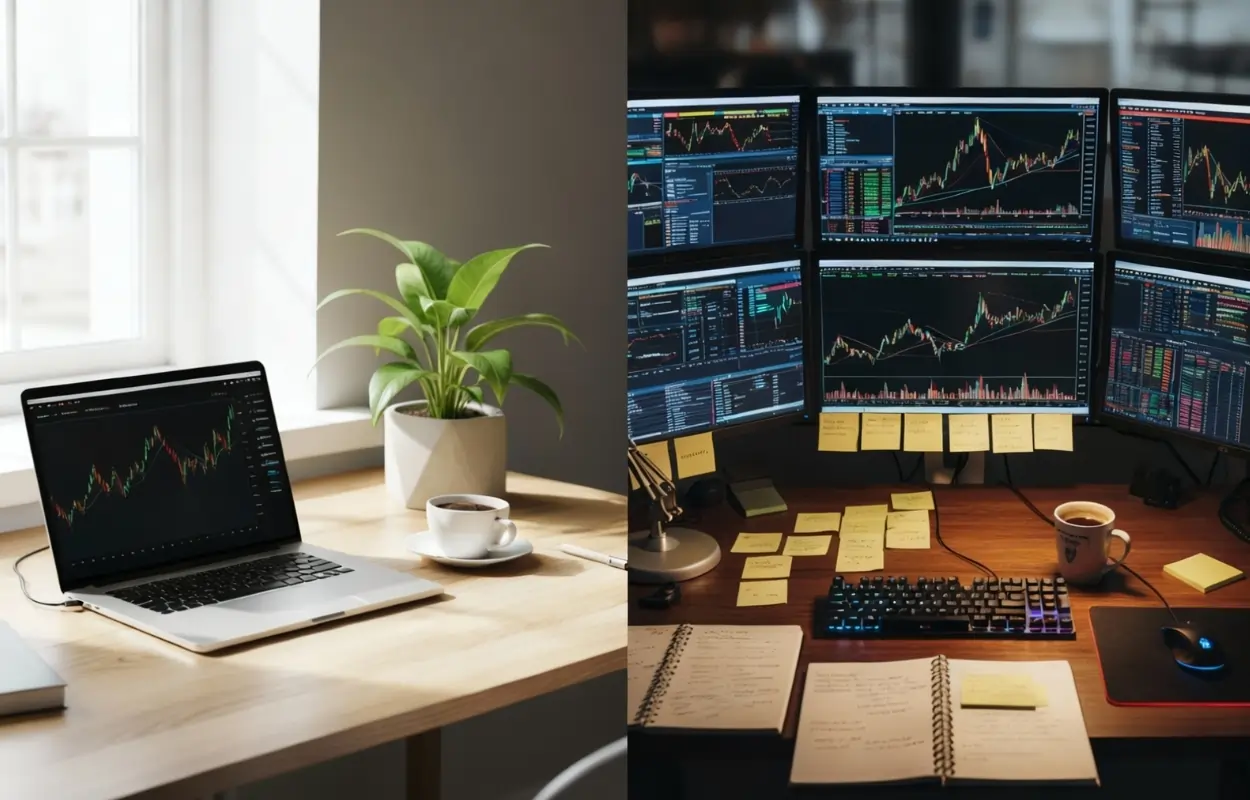
    Choosing a trading style is a critical decision. It shapes your market interaction, your daily schedule, and your risk management. The debate between swing trading and day trading is common. There is no single correct answer. The best approach depends on your personality, your available time, and your financial goals.

    This article breaks down both methodologies. It provides a clear view of what each requires. Day trading involves buying and selling assets within a single day. Swing trading means holding positions for several days or weeks to profit from price movements. Your choice will define your journey as a trader. Let us examine the details of each strategy to help you select the right fit.

    The World of Day Trading

    Day trading is a method where you open and close all trades within the same day. No position is held overnight. The goal is to accumulate small profits from many trades throughout the day. These profits compound over time. This approach demands a serious commitment.

    A day trader makes decisions based on small price fluctuations. You must watch the markets constantly during your trading session. Success depends on technical analysis, recognizing chart patterns, and understanding market momentum. You need to act quickly and without hesitation. Day trading is not a part-time activity. It is a focused profession that requires your full attention.

    Who is suited for day trading? This style fits individuals with intense discipline and decisiveness. You need to dedicate several uninterrupted hours to the screen each day. It demands a person who can handle the pressure of rapid market changes. You must manage your emotions effectively. The fast pace means you will experience both gains and losses quickly. Emotional control is essential.

    To be a day trader, you need specific tools and knowledge. You must have a deep understanding of technical indicators and chart analysis. Access to a high-quality trading platform with real-time data is non-negotiable. A fast and reliable internet connection is also fundamental. This is a high-speed environment where seconds matter.

    The Pace of Swing Trading

    Swing trading operates on a different timeline. Swing traders aim to capture larger price moves, or “swings,” than day traders. These trades last from a couple of days to several weeks. Unlike day trading, holding positions overnight is a core part of the strategy. This extended timeframe changes the entire approach.

    Swing traders spend less time monitoring the markets minute-by-minute. Instead, they focus on analyzing daily or four-hour charts to identify potential trends. The goal is to enter a trade and let it develop over time.

    This method combines technical analysis to pinpoint entry and exit points with fundamental analysis. Understanding the bigger economic picture helps a swing trader to stay with a trend.

    This style is often a better fit for people with other commitments, like a full-time job. You can analyze charts and place orders outside of market hours. The primary skill here is patience. You must be comfortable holding a position through periods of market volatility. You need confidence in your analysis to avoid closing a trade too early.

    The requirements for swing trading are different from day trading. Patience is the most important quality. You need the discipline to let your trades work. You must also accept overnight risk. The market can move against you while you are asleep due to news or events in other time zones. To manage this, swing traders use wider stop-loss orders.

    This means you need sufficient capital to allow your trades room to move without being stopped out prematurely. A solid grasp of both technical and fundamental factors is also necessary for making informed decisions.

    A Direct Comparison: Key Differences

    Understanding the core distinctions between day trading and swing trading helps clarify which path to take. Each factor presents a trade-off. Your personal preferences and circumstances will guide your decision. Let’s compare them directly across several key areas.

    Time Commitment
    Day trading is a full-time job. It requires you to be at your trading desk for several hours every day, focused on the market’s every move. Swing trading demands far less screen time. You might spend a few hours per week analyzing charts and managing your positions. This makes it accessible to people who cannot commit their entire day to trading.

    Trading Frequency
    A day trader executes numerous trades daily. The strategy is built on high volume and small gains. A swing trader is more selective. You might only take a few trades per week or even per month. Each trade is chosen to capture a significant price swing. The focus is on the quality of the setup, not the quantity of trades.

    Risk Exposure
    Day traders close all positions before the market closes. This eliminates the risk of overnight news causing a large price gap at the next open. Your risk is confined to the trading day. Swing traders accept overnight and weekend risk. A political event or economic data release can cause the market to open far from its previous close. This exposure requires careful risk management and appropriate position sizing.

    Psychological Demands
    The mental skills for each style differ. Day trading requires intense focus, fast decision-making, and the ability to handle stress. You must remain composed while managing multiple positions in a fast-moving environment. Swing trading demands patience and emotional discipline. You must trust your analysis and resist the urge to constantly tinker with your trades. You also need the conviction to hold positions through minor pullbacks.

    Building Your Trading Plan

    Once you have an idea of which style suits you, the next step is to build a trading plan. A plan is a set of rules that governs your trading decisions. It is your guide for navigating the markets. It should be written down and followed without deviation.

    For a day trader, your plan must be precise. Define your exact entry and exit criteria. Specify the market conditions you will trade and the ones you will avoid. Your risk management rules are critical. Determine the maximum amount you will risk per trade and per day. A daily routine is helpful. This includes pre-market analysis, your trading session, and a post-market review of your performance.

    For a swing trader, your plan focuses on a wider timeframe. It should detail how you identify major trends and turning points. Define your criteria for entering a trade based on daily or weekly chart patterns. Your stop-loss and profit targets will be larger to account for bigger price swings. A trade journal is vital. Use it to document your reasons for each trade and review your decisions. This helps refine your strategy over time.

    Choosing Your Path

    The right trading strategy aligns with your life. There is no universally “better” style. Day trading offers a fast-paced environment with immediate feedback. Swing trading provides a more flexible approach that fits around other responsibilities. Both require education, practice, and a disciplined mindset.

    Analyze your own personality, risk tolerance, and available time. Be honest with your self-assessment. This is the first step toward building a sustainable trading career. Remember that all trading involves substantial risk. You should understand the risks before committing capital. Past performance does not guarantee future results. Choose your path, create your plan, and commit to disciplined execution.

  • The Forex Trader’s Guide to Fibonacci Retracement

    The Forex Trader’s Guide to Fibonacci Retracement

    Successful trading demands a plan. A robust strategy provides structure, defines entry and exit points, and manages risk. Without one, you are navigating the markets without a compass. The Fibonacci retracement tool is a cornerstone of technical analysis for countless traders around the world. It offers a method for identifying potential price reversals. 

    This guide gives you a direct, actionable framework for incorporating this tool into your Forex Trading. We will dissect how it works, how to apply it, and how to build a complete trading methodology around it. Your goal is to move from theory to confident execution. This article shows you how.

    Understanding Fibonacci Retracement

    The Fibonacci tool is based on a mathematical sequence identified by Leonardo of Pisa in the 13th century. In the sequence, each number is the sum of the two preceding ones: 0, 1, 1, 2, 3, 5, 8, 13, 21, and so on. The magic for traders comes from the ratios derived from these numbers. After the sequence gets going, dividing one number by the next number yields a ratio of approximately 0.618, or 61.8%. This is known as the Golden Ratio.

    From these numbers, we derive the key Fibonacci retracement levels used in trading:

    • 23.6%
    • 38.2%
    • 50.0%
    • 61.8%
    • 78.6%

    The core idea is simple. After a significant price move in one direction, the price will often pull back or retrace a portion of that move before continuing in the original direction. Fibonacci levels highlight potential areas where this pullback might stop and the trend might resume. 

    These levels function as potential support in an uptrend or potential resistance in a downtrend. They are not arbitrary lines on a chart. They represent potential zones of psychological and strategic importance where traders might place orders, creating self-fulfilling support or resistance. Your job is to watch for price action at these specific levels.

    Applying Fibonacci to Forex Charts

    Applying the Fibonacci retracement tool is a straightforward technical skill. It requires identifying a clear price swing and a sustained trend. You cannot use the tool effectively in a sideways or ranging market. The market must be moving in a discernible direction, either up or down.

    First, you must identify a completed price move, known as a Swing High and a Swing Low. A Swing High is the highest peak in a chart section before the price moves down. A Swing Low is the lowest valley before the price moves up. Once you have these two points, the application is precise.

    For an Uptrend: You need to find a clear Swing Low and a subsequent Swing High. Select the Fibonacci retracement tool on your trading platform. Click first on the Swing Low and drag your cursor to the Swing High. The tool will automatically project the key Fibonacci retracement levels onto your chart. These levels are below the Swing High and represent potential support zones where a price pullback might find a floor before moving up again.

    For a Downtrend: You do the opposite. Find a clear Swing High and a subsequent Swing Low. Click first on the Swing High and drag your cursor down to the Swing Low. The retracement levels will appear above the Swing Low. These are potential resistance zones where a relief rally might stall before the price continues its downward path.

    Accuracy is critical. Selecting the correct Swing High and Swing Low is the most important step. Choosing minor, insignificant price swings will produce unreliable levels and lead to poor trading decisions. Focus on major, obvious market moves to get the most reliable signals.

    Building Your Fibonacci Trading Plan

    The Fibonacci tool is more than an indicator. It is the foundation for a complete trading plan. A plan dictates how you enter a trade, where you place your protective stop-loss, and how you take profits. This structure converts a simple observation into a systematic trading strategy.

    Finding Your Entry Point

    The retracement levels are your zones of interest for trade entries. In an uptrend, after the price makes a Swing High and begins to pull back, you should watch the 38.2%, 50.0%, and 61.8% levels. These are the most common reversal zones. An entry signal occurs when the price touches one of these levels and shows signs of rejecting it.

    For instance, the price might fall to the 50.0% level, stall, and then form a bullish candlestick pattern.

    This confirms the level is acting as support and offers a potential entry point for a long trade. You are trading with the prevailing trend, which is a fundamental principle of sound trading.

    Setting Your Stop-Loss

    Every trade needs a stop-loss. It is your non-negotiable protection against a larger-than-expected loss. When using Fibonacci levels, stop-loss placement is logical.

    If you enter a long trade at the 61.8% retracement level, a common practice is to place your stop-loss just below the next level, the 78.6% level, or below the original Swing Low.

    A price move below the Swing Low invalidates the entire uptrend structure you based your trade on. This means your initial analysis was wrong, and you must exit the trade to protect your capital. Your stop-loss is the mechanical execution of that decision.

    Defining Your Profit Target

    Your trading plan also needs a clear exit strategy for taking profits. The initial Swing High in an uptrend is a logical first target. Many traders close a portion of their position there and let the rest run. For more ambitious targets, traders use Fibonacci extension levels, such as 127.2% and 161.8%.

    These levels are projected beyond the recent Swing High and suggest where the price might travel if the trend continues with momentum. A disciplined approach means you define these exit points before you ever enter the trade.

    Enhancing Fibonacci Signals

    The Fibonacci tool is strong, but it performs better when combined with other technical indicators.

    This process of confirmation, or confluence, strengthens your trading signals. Relying on a single indicator for your decisions is a recipe for failure. A successful trader builds a case for each trade using multiple, non-correlated sources of information.

    • Moving Averages: A popular strategy is to look for confluence between a Fibonacci level and a major moving average, like the 50-period or 200-period moving average. Imagine a scenario where the price in an uptrend pulls back to the 61.8% Fibonacci retracement level. If that same level coincides with the 50-period moving average, which is also acting as dynamic support, the signal to buy is significantly stronger.
    • Candlestick Patterns: Price action itself gives you clues. When the price reaches a key Fibonacci level, look for confirmation from candlestick patterns. A bullish engulfing pattern, a hammer, or a doji at a Fibonacci support level in an uptrend suggests buyers are stepping in. These patterns provide visual confirmation that the level is holding and a reversal is probable.
    • Oscillators: Indicators like the Relative Strength Index (RSI) or the Stochastic Oscillator help gauge momentum. If the price drops to a Fibonacci support level and the RSI is in the “oversold” territory (typically below 30), it adds weight to a potential bullish reversal. This combination tells you not only that the price is at a key support level, but also that the preceding downward move is exhausted.

    Pitfalls in Fibonacci Analysis

    While the Fibonacci tool is useful, traders often make predictable mistakes when using it. Awareness of these common errors helps you avoid them. Your consistency depends on disciplined application and a clear understanding of the tool’s limitations.

    The first mistake is using the tool in isolation. As we discussed, Fibonacci levels are best used with other indicators for confirmation. A level by itself is a point of interest, not a command to trade. Wait for extra evidence.

    The second major error is incorrect application. Many traders struggle to identify the correct Swing High and Swing Low points. If you draw your levels based on insignificant price moves, the levels themselves become insignificant. Always use major, obvious swing points on your chart. Zoom out to a higher time frame to confirm that you have identified a significant trend structure.

    A third mistake is forcing a signal when there is none. The Fibonacci tool works in trending markets. Applying it to a sideways, choppy market will generate confusing levels and false signals. If there is no clear trend, you should not use trend-following tools. Patience is a skill. The right setup will appear if you wait for it.

    A Final Word on Risk

    No indicator or trading strategy guarantees profit. Forex trading involves substantial risk, and you should never invest capital that you cannot afford to lose.

    The Fibonacci retracement tool is a method for identifying potential opportunities, not a crystal ball. Its effectiveness is tied to a disciplined trading plan, strong risk management, and the confirmation of other indicators. 

    Every single trade you take must have a predefined stop-loss to protect your account. The market’s direction is never certain. Your risk, however, must always be defined and controlled. Your long-term success as a trader depends not on your winning trades, but on how you manage your losing ones.

    Approach every setup with this principle at the forefront of your mind.