Tag: FredRazak

  • Forex Trading Strategies That Actually Work: A Deep Dive for Currency Traders

    Forex Trading Strategies That Actually Work: A Deep Dive for Currency Traders

    The foreign exchange market, or Forex, is the biggest financial market in the world. Trillions of dollars change hands every day in a 24-hour, decentralized, over-the-counter global market environment. It is the market where governments wage economic warfare, where global corporations hedge their operational risk, and where retail traders participate with varying degrees of success, depending on knowledge, strategy, and risk management.

    Most retail traders approach Forex with the same simplistic logic they use for stocks: “I think the Euro is going up, so I’ll buy it.” This is like showing up to a Formula 1 race with a go-kart.

    The Forex market is not a collection of companies; it is a collection of economies. You are not trading a product; you are trading a country’s interest rate policy, its inflation data, its political stability, and the collective market sentiment driven by economic expectations. The price of EUR/USD is not just a line on a chart; it is a dynamic, real-time referendum on the relative strength of the Eurozone versus the United States.

    To trade it successfully, market participants typically require strategies built for this unique environment. You need to think less like a stock picker and more like a macro strategist with a healthy dose of technical precision. Here are the strategies that form the bedrock of professional currency trading, presented for educational purposes and without implying guaranteed outcomes, stripped of the marketing hype.

    1. The Carry Trade: The Landlord of the Forex Market

    The Carry Trade is one of the oldest and most fundamental strategies in currency trading. It is also the closest thing Forex has to “passive income,” which is to say, it is not passive at all, but it is less frenetic than other approaches.

    The Concept: At its core, the carry trade is an arbitrage on interest rates. You borrow a currency with a low interest rate (like the Japanese Yen or the Swiss Franc, historically) and use that money to buy a currency with a high interest rate (like the Australian Dollar or the New Zealand Dollar).

    Every day you hold this position, your broker may credit or debit  you the “carry”: the difference between the two interest rates. You are effectively acting like a landlord, collecting rent on your capital. Historically, , professional traders made a living simply by buying AUD/JPY and holding it, collecting the daily interest payments.

    The Execution: A trader identifies a currency pair with a significant interest rate differential. For example, if Australia’s interest rate is 4% and Japan’s is 0.1%, the differential is 3.9%. The trader buys AUD/JPY. As long as the exchange rate remains stable or rises, the trader collects the interest rate differential, which is typically paid daily into their account (known as “positive rollover” or “positive swap”).

    The Hidden Risk: The carry trade looks like free money until it isn’t. The risk is exchange rate volatility. If the high-yielding currency suddenly drops in value against the low-yielding currency, capital losses may exceed the accumulated interest payments over a relatively short period of time. 

    This is exactly what can occur during a “risk-off” event. When the global economy looks shaky, investors panic. They dump high-risk, high-yield assets and flee to “safe-haven” currencies like the Yen and the Swiss Franc. The AUD/JPY pair can decline sharply in these moments, significantly impacting those holding carry positions.

    The carry trade is a bet on global stability. When times are good and volatility is low, it can perform as intended. When fear takes over, it may result in rapid and significant losses.

    2. Trend Following on Major Pairs: Riding the Macro Waves

    The Forex market is widely known for periods of long, sustained trends. These are not random walks; they are driven by powerful macroeconomic forces that may take months or even years to play out. A central bank raising interest rates over a 12-month period can create a meaningful tailwind for its currency.

    The trend follower is not interested in predicting these trends. They are interested in identifying them once they have begun and seeking to participate until they show signs of reversal.

    The Concept: The trend follower uses simple, predefined and objective technical rules to define a trend and stay in it. They do not care why the Euro is falling; they only care that it is falling and that their system indicates a short position

    The Execution: The classic trend-following toolkit is intentionally simple:

    • Moving Averages: The trader might use a crossover system. When a fast moving average (like the 50-day) crosses above a slow moving average (like the 200-day), a new uptrend is signaled, and they buy. They hold the position until the averages cross back.
    • Donchian Channels or Price Channels: This indicator plots the highest high and the lowest low over a set period (e.g., 20 days). A close above the upper channel is a buy signal. A close below the lower channel is a sell signal. The trader typically stays in the trade until the opposite channel is breached.

    The key to trend following is letting profits run and cutting losses short. A trend follower often experiences  many small losses. The system will get “whipsawed” in choppy, non-trending markets. But the goal is to capture a sustained trend that pays for all the small losses and then some.

    The Psychological Pain: Trend following is psychologically demanding. The win rate is often low, sometimes below 40%. The trader has to endure long periods of small, frustrating losses while waiting for the big move. They have to fight the constant urge to take profits too early on a winning trade, knowing that the system’s edge comes from catching the outlier, the “black swan” trend. It is a strategy that requires immense patience and a complete surrender to the system’s rules.

    3. News Trading: The Adrenaline Junkie’s Game

    While some traders avoid news events, others specialize in them. This is the high-stakes world of news trading, where significant gains or losses can occur t in the seconds following a major economic data release.

    The Concept: Major economic announcements, like the US Non-Farm Payrolls (NFP) report, Consumer Price Index (CPI) inflation data, or a central bank interest rate decision—often result in a sharp and  immediate volatility in the currency markets. The news trader attempts to profit from this explosion of movement.

    The Execution: There are two primary schools of thought in news trading:

    1. The Directional Bet: This is generally considered as the riskiest approach. The trader analyzes the consensus expectations for the data release. If they believe the actual number will be significantly different (e.g., much higher inflation than expected), they will place a directional trade just before the release. This approach carries a high degree of uncertainty, as the market’s reaction may differ from expectations, even when the data outcome appears clear.
    2. The Volatility Play: This is a more sophisticated approach. The trader does not care if the number is good or bad. They only care that it will cause a big move. They use strategies like “straddles” or “strangles” with options, or they place buy-stop and sell-stop orders on either side of the current price just before the release. The goal is to get triggered into a position by the initial price spike, whichever direction it goes.

    The Reality of the Spread: In the moments surrounding a major news release, the market becomes a ghost town. Liquidity dries up. The bid-ask spread widens significantly. A spread that is normally 0.5 pips may expand substantially during these periods. This means that even if you guess the direction right, you can get a terrible fill price (“slippage”), and the market has to move significantly in your favor just for you to break even.

    News trading is a professional’s game. It requires lightning-fast execution, a high tolerance for risk, and an understanding that that transaction costs, including spreads and slippage, can materially affect outcomes. Less experienced traders who engage in major news events may face heightened risk due to these factors

    4. Range Trading in “Quiet” Pairs: The Sideways Grind

    Not all currency pairs are volatile in nature. Some, like EUR/CHF or AUD/NZD, are known for their tendency to trade in well-defined, sideways ranges for long periods. These are the “quiet” pairs, driven by economies that are closely linked and often move in tandem.

    The range trader is the opposite of the trend follower. They are looking for boredom.

    The Concept: A range trader identifies a currency pair that is oscillating between a clear support level and a clear resistance level. They operate on the assumption that the range may continue to hold.

    The Execution: The strategy is simple:

    • Sell at the top of the range: As the price approaches the resistance level, the trader looks for signs of exhaustion (like a bearish candlestick pattern or RSI divergence) and enters a short position. The stop-loss is placed just above the resistance.
    • Buy at the bottom of the range: As the price approaches the support level, the trader looks for signs of buying interest and enters a long position. The stop-loss is placed just below the support.

    The range trader is like a tennis player hitting the ball back and forth across the court. They are not trying to win the point with a single smash; they are just keeping the ball in play, collecting small profits from the predictable oscillations.

    The Danger of the Breakout: The biggest risk for a range trader is that the range breaks. After weeks of predictable movement, a sudden catalyst can cause the price to break decisively through support or resistance and start a new trend. The range trader must have a stop-loss in place and respect it without question. When the music stops, the range trader has to get out of the way.

    5. Technical Confluence Trading: The Multi-Layered Approach

    This is less of a standalone strategy and more of a meta-strategy that combines elements of all the others. The professional discretionary trader rarely relies on a single indicator or pattern. They look for “confluence”—a situation where multiple, independent analytical tools are all pointing to the same conclusion.

    The Concept: The confluence trader believes that the highest-probability trades occur at points on the chart where several different types of support or resistance intersect.

    The Execution: A trader might be looking for a long entry on EUR/USD. They will not buy just because the price hits a moving average. They will wait for a setup where:

    • The price is at a major horizontal support level from the daily chart.
    • That level also happens to be a 61.8% Fibonacci retracement of the last major upswing.
    • The price is also interacting with the 200-day moving average.
    • The RSI is in oversold territory.
    • A bullish engulfing candle prints at that exact spot.

    This is a confluence setup. Five different, non-correlated reasons are all suggesting that this is a critical inflection point. The probability of a bounce from this level is generally considered higher than a bounce from a random point on the chart.

    The Risk of Over-Analysis: The danger of confluence trading is “analysis paralysis.” A trader can wait for so many conditions to align that they never end up taking a trade. The key is to define a small handful of key confluence factors in advance and act when they appear, without needing the entire universe to align perfectly.

    The Unspoken Truth About Forex Trading

    The Forex market is a deep and dangerous ocean. These strategies are the boats that professionals use to navigate it. But the strategy is not the most important part. The most important part is risk management.

    The extreme leverage available in Forex (often up to 50:1 or 100:1 depending on jurisdiction and broker) can significantly amplify both gains and losses. . A small move against a highly leveraged position can result in substantial losses, including the loss of the entire trading account. t. A professional trader thinks about risk before they even think about profit. They usually risk a tiny fraction of their capital  on any single trade. They use stop-losses religiously. They understand that their job is not to be a hero; their job is to survive.

    The strategies above can be applied effectively. But they only work within a rigid framework of discipline and capital preservation. Without that framework, they are simply different ways of steadily burning through trading capital.

    Final Reminder: Risk Never Sleeps

    Heads up: Trading is risky. This is only educational information, not an investment advice.

  • Commodities Trading Strategies: Investing in Gold, Oil, and Agricultural Futures

    Commodities Trading Strategies: Investing in Gold, Oil, and Agricultural Futures

    Most people think of “the market” as a collection of company logos: Apple, Tesla, Amazon. But there is an older, deeper market that does not care about quarterly earnings calls or CEO tweets. It cares about rain in Brazil, war in the Middle East, and how much gold is sitting in a vault in London. This is the commodities market. It is the raw material of the global economy, traded in a pit of volatility that makes the stock market look polite.

    Commodities do not trade like stocks. A stock can go to zero if the company fails. Physical commodities represent tangible goods with ongoing utility, which means their pricing dynamics are driven by supply constraints and demand needs rather than corporate balance sheets. Because they represent physical goods, they are driven by the brutal, tangible forces of supply and demand. Trading them requires a different mindset and a different set of strategies.

    The Three Kings: Metals, Energy, and Agriculture

    Commodities are generally split into three main sectors, each with its own personality.

    1. Precious Metals (Gold, Silver): The Fear Trade
    Gold is not an industrial metal; it is often viewed as a store of value that exists outside the control of any single government.,. It tends to respond to perceptions of risk, inflation expectations, and currency strength, particularly movements in the US dollar. During periods of economic or geopolitical uncertainty, market participants often increase exposure to gold..

    The Strategy: Gold traders watch real interest rates (interest rates minus inflation). When real rates are negative, gold shines because holding cash loses value. When real rates rise, gold often falls because it pays no dividend.​

    2. Energy (Crude Oil, Natural Gas): The Geopolitical Trade
    Oil is the lifeblood of the modern world. Its price is dictated by a cartel (OPEC), global economic growth, and conflict. It trends beautifully but can reverse violently on a single headline.

    The Strategy: Energy traders are obsessed with inventory data. Every week, reports show how much oil is sitting in storage. A surprise draw in inventory can send prices spiking. It is a game of supply shock versus demand destruction.

    3. Agriculture (Corn, Soybeans, Wheat): The Weather Trade
    This is the wildest sector. A drought in the Midwest or a flood in Ukraine can send grain prices parabolic.

    The Strategy: Seasonality rules here. Grains have planting seasons and harvest seasons. Prices tend to be lowest at harvest (when supply is highest) and highest during the growing season (when weather risk is present). Trading “Ag” involves managing exposure to weather-driven supply risk.

    Futures: The Weapon of Choice

    You can trade commodities through ETFs, but the professionals use futures. A futures contract is an agreement to buy or sell a specific amount of a commodity at a specific date.

    Futures offer significant leverage.  A relatively small margin deposit can control a much larger notional position. . This leverage is a double-edged sword. It amplifies both gains and losses,, and even modest adverse price movements can result in substantial losses or margin calls.

    The nuance of futures is the “term structure.” Futures contracts have expiration dates. If the price of future contracts is higher than the current price, the market is in “contango.” If it is lower, it is in “backwardation.” These weird words matter because they dictate whether you lose money or make money just by holding the position (the “roll yield”).​

    Strategy 1: Trend Following (The “Big Move” Hunter)

    Commodities are famous for long, sustained trends. When a supply shortage hits, it takes time to fix. You can’t just build a new copper mine or grow a new crop of soybeans overnight. This leads to trends that can last for months or years.

    Trend followers don’t care why the price is moving. They don’t read weather reports. They just use technical indicators like Moving Averages or Donchian Channels. If the price breaks out to a new 20-day high, they buy. If it breaks to a new low, they sell short. They eat small losses in choppy markets to catch the one monster trend that pays for everything.

    Strategy 2: Spread Trading (The Relative Value Play)

    This is for the trader who hates directional risk. Instead of betting that oil will go up, you bet that oil will outperform natural gas. You buy one futures contract and sell another.

    • The Crack Spread: Buy Crude Oil, Sell Gasoline. You are betting on the profit margin of oil refineries.
    • The Gold/Silver Ratio: Buy Gold, Sell Silver. You are betting on the relative value of the two metals.

    Spreads are generally less volatile than outright directional positions. They isolate specific economic relationships and remove the general noise of “the market went down today”.​

    Strategy 3: Seasonality (The Calendar Play)

    Commodities have rhythms. Natural gas demand peaks in winter (heating). Gasoline demand peaks in summer (driving season). Heating oil is cheap in July and expensive in January.

    Seasonal traders look for these historical patterns. They buy natural gas in September, anticipating the winter run-up. They buy corn in early spring, anticipating the “planting risk premium.” It is not guaranteed (a warm winter can crush natural gas prices) but they are used to frame probabilities, not outcomes..

    The Reality Check

    Commodities trading is not for the passive investor. It is a high-maintenance relationship.

    • Volatility is extreme. Limit up/limit down days (where trading is halted because the price moved too much) are real risks.
    • The news cycle is 24/7. A pipeline explosion in Nigeria or a strike in Chile happens while you sleep.
    • Leverage kills. The most common mistake is trading too big. In futures, position sizing and margin management are critical to managing downside risk.

    Commodities are the rawest form of trading. There are no earnings reports to massage, no CEOs to spin the narrative. There is only the brutal truth of how much stuff the world has, and how much it needs. It is the ultimate arena for the macro trader.

    Final Reminder: Risk Never Sleeps

    Heads up: Trading is risky. This is only educational information, not an investment advice.

  • Debunking Trading Myths: What Really Works and What Doesn’t

    Debunking Trading Myths: What Really Works and What Doesn’t

    The trading industry is a masterclass in marketing. It sells the dream of freedom, easy money, and intellectual superiority. It whispers that if you just find the right indicator, the perfect setting, or the secret chat room, you will unlock the ATM of the global economy.

    This is, of course, misleading.

    Trading is a performance discipline, closer to professional athletics than to passive investing. It is hard, it is often boring, and the marketplace is highly competitive. To survive, you must first unlearn the lies that got you interested in the first place.

    Here are the most pervasive myths in trading, and the uncomfortable truths that replace them.

    Myth 1: “You Can Predict the Market”

    This is the original sin of trading. Novices believe their job is to know what will happen next. They study charts, read news, and watch experts on TV, all in an attempt to build a crystal ball.

    The Reality: You cannot predict the future. Nobody can. The best traders in the world have absolutely no idea what the market will do in the next hour.

    What Works: Instead of prediction, professionals focus on probability. They don’t know if a specific trade will win or lose. They know that a specific setup, over a sample size of 100 trades, may historically show   a 60% win rate. They don’t try to be prophets; they try to be risk managers. They manage the edge, not the outcome.

    Myth 2: “You Need a High Win Rate to Be Profitable”

    Most people assume that to make money, you need to be right most of the time. They obsess over finding a strategy with a 90% win rate. When they lose three trades in a row, they abandon their system and look for a new one.

    The Reality: You can be wrong half the time, or even more, and still achieve positive results over time. George Soros famously said, “It’s not whether you’re right or wrong that’s important, but how much money you make when you’re right and how much you lose when you’re wrong.”

    What Works: The holy grail is not accuracy; it is the Risk-to-Reward Ratio. If you risk $1 to make $3, you only need to be right slightly over 30% of the time to break even. Trend followers often have win rates below 40%, but their winners are large enough to offset a series of smaller losses..

    Myth 3: “Trading is Easy Money / Passive Income”

    YouTube ads love this one. They show a guy on a beach with a laptop, claiming he made $5,000 in ten minutes before breakfast. They sell the idea that trading is a lifestyle product, not a career.

    The Reality: Trading is often far more difficult than it appears.. It requires thousands of hours of study, immense psychological resilience, and the willingness to lose money repeatedly while learning. It is not passive. It is mentally demanding and time-intensive.

    What Works: Treat trading like a business, not a hobby. A business has overhead (commissions, data fees), inventory (capital), and risk of ruin. It requires a business plan (trading plan), performance reviews (journaling), and risk management. Approaching trading casually increases the likelihood of poor outcomes, much like relying on chance rather than process.

    Myth 4: “Indicators Are the Key to Success”

    New traders load their charts with MACD, RSI, Bollinger Bands, Stochastics, and three different moving averages. They look for the perfect alignment of lines, believing that more data equals better decisions.

    The Reality: Indicators are derivative. They are just price and volume data mashed through a formula. They lag the market. A chart cluttered with indicators leads to “analysis paralysis,” where conflicting signals prevent you from pulling the trigger.

    What Works: Focus on Price Action. The raw movement of price is the only truth. Support and resistance, trend structure (higher highs/lower lows), and volume tell you everything you need to know. Indicators can be useful as supplementary confirmation, but they are rarely effective as standalone decision tools.

    Myth 5: “You Need to Know Everything About the Economy”

    There is a belief that to trade the S&P 500, you need to understand inflation data, yield curves, geopolitical tensions, and the minutes of the Federal Reserve meetings.

    The Reality: The market is not the economy. The market is a reflection of what people think about the economy. Often, “bad news” causes the market to rally (because investors expect the Fed to cut rates), and “good news” causes it to drop (because investors fear inflation). Trying to trade based on logic is a fast way to go broke.

    What Works: Trade the chart, not the news. The chart reflects the sum total of all market participants’ knowledge and actions. If the news is bad but the price is going up, the price is right and the news doesn’t matter. Price pays. Logic doesn’t.

    Myth 6: “The Market is Rigged Against the Little Guy”

    When traders lose, they often blame High-Frequency Trading (HFT) algorithms, market makers, or “manipulation.” It is a comforting lie that absolves them of responsibility.

    The Reality: The market is not rigged against you; it is indifferent to you. You are too small to matter. Market makers are not hunting your stop-loss specifically. They are just doing their job, providing liquidity.

    What Works: Accept responsibility. Losses typically come from timing, position sizing, or risk management decisions. The market is a mirror. It reflects your own discipline (or lack thereof) back at you.

    The Bottom Line

    Successful trading is a process of subtraction. You subtract the ego, the need to predict, the reliance on complex indicators, and the search for shortcuts. What remains is a simple, boring routine: risk management, probability, and discipline. It is not magic. It is just work. And that is why so few people actually do it.

    Final Reminder: Risk Never Sleeps

    Heads up: Trading is risky. This is only educational information, not an investment advice.

  • Understanding Fibonacci Retracement

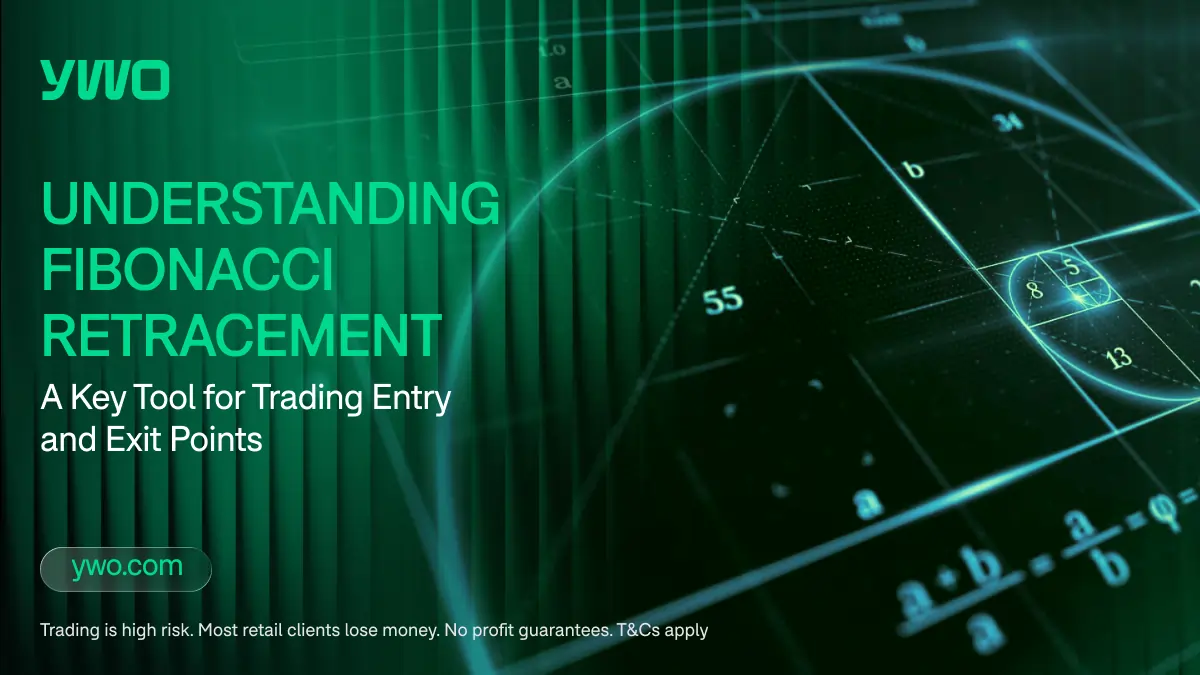
    Understanding Fibonacci Retracement

    A Key Tool for Trading Entry and Exit Points

    Most traders encounter Fibonacci retracement the way people encounter espresso. First reaction: this looks fancy. Second reaction: this is stronger than expected. Third reaction: overuse leads to bad decisions. Used properly, Fibonacci retracement is not magic. It is a structured way to answer a simple question: “If this market is only pausing, where might it reasonably pull back to before continuing the move?”​

    It is a measuring tape. Nothing more. The fact that many traders treat it like a shrine is precisely why it sometimes works. Crowds staring at the same levels often react at those exact levels.

    What Fibonacci Retracement Actually Is

    Ignore the mythology for a moment. In trading, Fibonacci retracement is a commonly used technical tool that plots a set of horizontal lines plotted between a significant high and low. Those lines sit at specific percentages of that move, usually 23.6%, 38.2%, 50%, 61.8%, and 78.6%.​

    If price runs from 100 to 200 and then starts to pull back, Fibonacci retracement levels mark potential “zones of interest” on the way back down. A 38.2% retracement is near 161.8. A 50% retracement is at 150. A 61.8% retracement is near 138.2. Traders often monitor these levels because so many others also watch them. The underlying idea is that strong trends often do not reverse in a straight line. They advance, correct part of the move, then may attempt to continue.

    Fibonacci retracement does not provide signals on its own or guarantee outcomes. It assumes a trend already exists. The tool is typically used to help frame where an entry in line with that trend might be sensible, and where an exit might make sense if the retracement goes too far.

    How Traders Plot It (Without Making It Useless)

    The first mistake most traders make is drawing Fibonacci levels on every tiny squiggle. That produces a chart that looks like a spider web and has about the same analytical value. The tool works best on clearly defined swings. For example:

    • A strong rally leg on a daily or 4 hour chart.
    • A clean selloff that stands out from prior moves.

    In an uptrend, the trader anchors the tool at the swing low and drags it to the swing high. In a downtrend, they do the opposite. The resulting retracement grid is now locked to that move.. No arbitrary placement. No “adjusting until it fits.”

    From there, the trader narrows focus to one or two key levels. Most professionals tend to focus on 38.2%, 50%, and 61.8% as the main areas of interest,, and treat the remaining levels as secondary context. . The point is not to be precise to the decimal. The point is to define an area where a pause or reversal may be more likely to occur..​

    Entries: Buying The Pullback With A Plan

    Consider an uptrend. Price moves from 1.2000 to 1.2500 in a currency pair, then starts to pull back. A trader who missed the initial move does not want to chase at the top, but also does not want to sit out the entire trend. Fibonacci retracement can provide a structured framework.

    If price approaches the 38.2% level and shows a clear reaction, such as a strong rejection candle or an increase in buying volume, that level becomes a potential area of consideration. The logic is simple. The market has given back a modest portion of the move, profit‑takers and short‑term sellers have done their work, and buyers appear again.

    If price slices through the 38.2% area and heads toward 50% or 61.8%, the trader waits. Deeper retracements often reflect either a more violent shakeout inside the trend, or conditions that may precede a broader reversal. In practice, many swing traders prefer entries near the 50% or 61.8% areas, where the “value” relative to the recent move looks better, provided that  signs of support appear. The retracement level alone is not enough. Price action and context still rule.

    In an ideal world, the trader combines Fibonacci with structure that already existed. For example, if a 50% retracement from the recent rally coincides with a prior resistance level that might now act as support, and volume shows buyers active there, the case for an entry strengthens. The level has meaning from more than one angle.

    Exits: Where The Trade Has Overstayed Its Welcome

    Fibonacci retracement is not only an entry tool. It is also a clean way to define “too much” against a position. If a trader enters long after a pullback at the 38.2% level, they might place a stop somewhere under the 50% or 61.8% retracement. The thinking is that if the market gives back more than half or two‑thirds of the move, the original trend thesis may be weakening.

    On the take‑profit side, retracement levels from higher‑timeframe swings can act as logical reference points. . If a market is bouncing inside a broader downtrend, a rally into the 50% or 61.8% retracement of that larger decline may offer a potential exit zone. In that case, the trader is anticipating that many others will use those levels as areas to lighten up or re‑enter in the direction of the dominant downtrend.

    In short, Fibonacci retracement defines areas for both defensive and offensive decisions. It answers two questions that matter in every trade. “Where does this idea start to lose validity?” and “Where might market participants be more likely to react?”

    Common Misuses And How To Avoid Them

    The most common misuse is treating Fibonacci as a prediction machine. Traders draw levels, price bounces somewhere nearby, and they credit the math. They forget the dozens of times price ignored the levels completely. Selection bias does the rest.

    Another frequent error is piling Fibonacci levels from multiple swings on top of each other. While confluence can be useful, turning every minor high and low into a Fibonacci grid clutters the chart and creates a false sense of precision. Serious traders tend to reserve the tool for meaningful moves on higher‑timeframes and accept that not every wiggle deserves a calculated response.

    There is also a tendency to ignore volatility. In fast, news‑driven markets, price can overshoot even strong Fibonacci zones before snapping back. Blindly placing tight stops at exact retracement values often leads to repeat whipsaws. More experienced traders use the levels as broader zones, not razor‑thin lines, and place stops beyond obvious clusters to avoid getting shaken out by noise.

    Combining Fibonacci With Other Tools

    No professional relies on Fibonacci alone. It is one element in a larger framework. Many use it alongside:

    • Trend filters, such as moving averages, to ensure trades align with broader direction.​
    • Support and resistance drawn from prior highs and lows.
    • Momentum measures, like RSI, to spot when a retracement into a Fibonacci level coincides with a shift from exhaustion to renewed strength.

    For example, a trader might only take long entries on pullbacks to the 50% level if the price remains above the 200‑day moving average and RSI shows recovery from oversold territory. Here Fibonacci serves as the scaffolding for entries and exits, while other tools help validate that the structure is sound.

    Used this way, Fibonacci retracement stops being a mystical sequence and becomes what it should have been all along: a practical measuring tool in a market that rarely moves in straight lines.

    Final Reminder: Risk Never Sleeps

    Heads up: Trading is risky. This is only educational information, not investment advice.
  • Holiday Season Trading Strategies: Navigating Reduced Liquidity and Potential Rallies

    Holiday Season Trading Strategies: Navigating Reduced Liquidity and Potential Rallies

    Most people look forward to December for the holidays. Traders look forward to December with a mix of anticipation and dread. It is a time when the market personality often shifts. The institutional giants, the pension funds, the hedge funds, the market makers, start packing their bags for Aspen and St. Barts. Trading volume typically declines, and  the junior traders are left manning the desks.

    This creates a unique, potentially challenging  environment. The usual rules of engagement soften. Support levels become suggestions. Trends become lethargic. But within this thin, quiet market, specific opportunities emerge for those who understand the seasonal game.

    Trading the holidays is not about aggressively hunting for alpha. It is about understanding the “Santa Claus Rally,” being mindful of reduced liquidity, and preparing for the shift in conditions that often comes with the January reset.

    The Liquidity Trap: When the Adults Leave the Room

    The defining characteristic of holiday trading is often low liquidity. When the big players step away, there are fewer buyers and sellers to absorb orders.

    This has two major effects:

    1. The Chop: Markets tend to  drift aimlessly for hours. A setup that usually triggers a sharp breakout might instead result in a slow, drawn-outsideways bleed. The lack of volume means there is less participation to sustain a move.
    2. The Spike: Conversely, low liquidity means that a relatively small order can move the market more than usual. A sudden news headline in a thin market can lead to exaggerated price spikes. Stops may be triggered  more easily because the order book is hollow.

    For the scalper and the day trader, this is a nightmare. The spreads may widen, the slippage increases, and the “noise-to-signal” ratio often rises. The smart move for many short-term traders is to simply reduce size or take a vacation. Actively trading in thin conditions can increase risk exposure, especially over short timeframes.

    The “Santa Claus Rally”: Myth vs. Math

    Every year, the financial media breathlessly anticipates the “Santa Claus Rally.” This is the historical tendency for the stock market to rise in the last five trading days of December and the first two trading days of January.

    Statistically, it has occurred often.  Since 1950, the S&P 500 has averaged around a 1.3% gain during this seven-day window. It is frequently cited as one of the more consistent seasonal patterns in finance.

    Why does it happen? Theories abound. Some say it is tax-loss harvesting creating a “washout” before a rebound. Others say it is year-end bonuses flowing into retirement accounts. The cynics say it is simply the bears going on vacation, leaving the bulls to push prices up on low volume with no resistance.

    The strategy here is not to bet the farm on Santa. It is to have a long bias. Shorting a low-volume, holiday market is famously dangerous. The path of least resistance tends to be up. Swing traders often look to buy dips in mid-December, positioning themselves to ride the drift higher into the new year.

    The Tax-Loss Bounce: One Man’s Trash…

    While the broad market drifts, some stocks may offer a more tactical opportunity. This is the “Tax-Loss Bounce” concept.

    In November and early December, investors often sell their biggest losers to harvest tax losses. These beaten-down stocks can face relentless selling pressure, often pushing them far below their fair value. They become the unloved orphans of the market.

    But once the selling pressure eases, typically in the last week of December, these stocks may experience sharp rebounds. The sellers are done. The supply dries up. Value hunters step in.

    The approach is to monitor stocks that have been decimated year-to-date but have decent fundamentals. You buy them in the final weeks of December, essentially stepping in front of the dumpster truck after it has finished unloading. This is a mean-reversion thesis, not a certainty, based on the idea that temporary selling pressure can distort prices.

    The January Effect: Positioning for the Reset

    The holiday season is effectively the pre-game show for January. The first month of the year often sees a massive influx of fresh capital. Pension funds rebalance. new allocations are deployed. The “January Effect” refers to the historical tendency f that small-cap stocks tend to outperform large-caps in early January.

    More prepared traders use the quiet holiday period to organize watchlists. . They are not glued to the 1-minute chart. They are scanning for the sectors that institutions are likely to rotate into. They are watching for “relative strength”: stocks that are holding up well while the rest of the market drifts.

    If a stock holds steady during  the low-volume holiday lull, it is often a sign that someone is quietly accumulating shares. When the volume returns in January, these coiled springs are often the first to explode.

    The Bottom Line: Survive to January

    The best holiday trading strategy for most people is to close the laptop. The risk-to-reward ratio in a thin market is often poor. The moves are random, the spreads are wide, and the opportunity cost of missing time with family is high.

    If you must trade, change your gear.

    • Size Down: Cut your position size in half. The volatility of thin markets requires wider stops.
    • Widen Timeframes: Ignore the noise of the 5-minute chart. Look at the daily or 4-hour charts for clearer signals.
    • Be Patient: Fills will be slower. Breakouts will be less reliable. Do not force action where there is none.

    The market will be there in January. Typically it will be louder, deeper, and more liquid. The goal of December is not to be a hero. It is to protect your capital so you are ready when the real game starts again.

    Final Reminder: Risk Never Sleeps

    Heads up: Trading is risky. This is only educational information, not an investment advice.

  • Automated vs. Manual Trading: Which Approach is Right for Your Strategy?

    Automated vs. Manual Trading: Which Approach is Right for Your Strategy?

    In one corner of the trading world sits the discretionary trader. This is the cowboy. They rely on intuition, experience, and the ability to “read the tape.” They believe the market is a “living, breathing beast” that can be tamed with enough screen time and caffeine.

    In the other corner sits the algorithmic trader. This is the engineer. They believe the market is a “math problem” to be solved. They write code, backtest data, and let a server in a colocation facility handle execution according to predefined rules while they sleep.

    The debate between the two is often framed as “Art vs. Science.” The manual trader claims a computer can never understand the nuance of a panic sell-off. The algo trader claims a human can never execute with the cold, hard discipline of a machine.

    The truth, as usual, is somewhere in the middle. The market does not favor one approach over another.. The choice isn’t about which method is “better.” It is about which method best mitigates your specific weaknesses.

    The Case for Manual Trading: The Human Touch

    Manual trading is the oldest form of the game. It is you, the chart, and the buy button.

    The primary advantage of the human operator is adaptability. A human can look at a chart and say, “Technically this is a buy signal, but the Federal Reserve Chairman just started speaking and he looks angry, so I’m going to sit this one out.”

    An algorithm cannot assess tone, context, or non-quantifiable factors during an interview or conference call..It cannot read the room. A skilled manual trader can process qualitative information, news, sentiment, rumors, in a way that code simply cannot.

    The human brain is also an incredibly sophisticated pattern recognition machine. It can spot messy, non-linear relationships that are difficult to program. A manual trader can navigate a choppy, unpredictable market by adjusting bias based on evolving conditions.

    The downside, of course, is that the human brain is also highly emotional. Humans get tired. They get hungry. They become reactive.  A manual trader who takes three losses in a row may be more prone to take a fourth, poorly timed trade just to get the dopamine hit of a possible win. The greatest asset of the manual trader, their brain, is also their greatest liability.

    The Case for Automated Trading: The Cold Execution

    Automated trading is the reduction of emotional discretion. It is the process of turning a strategy into a rigid set of rules that execute without hesitation.

    The primary advantage of the machine is discipline. An algorithm does not second-guess itself. It does not “hope” a losing trade turns around. It does not move a stop-loss because it “feels” lucky. It executes the plan exactly as written, every single time.

    This consistency allows for something manual traders struggle with: scalability. An algorithm can monitor fifty markets simultaneously. It can execute trades in milliseconds. It can trade 24 hours a day without needing a coffee break or a nap.

    Furthermore, automated strategies can be backtested.  You can run your rules against historical data to evaluate whether an idea would have performed under past conditions.. A manual trader rarely has this level of objective verification; they rely on selective memory and confidence.

    The downside is rigidity. An algorithm is only as smart as its code. If market conditions change, if volatility spikes or liquidity dries up, the algorithm may continue  executing the old rules unless it is adjusted or stopped.. It is a “garbage in, garbage out” system. If the logic is flawed, the computer will execute that flaw with terrifying efficiency.

    The “Centaur” Approach: The Best of Both Worlds

    Smart traders often stop fighting this war and choose a third path. The “Centaur” model combines human intuition with machine precision.

    In this model, the computer does the grunt work. It scans thousands of stocks for setups. It alerts the trader when specific criteria are met. It calculates position size and risk parameters instantly.

    But the human makes the final decision

    The human provides the “sanity check.” They look at the setup the computer found and ask, “Does this make sense in the context of the wider market?” The human manages the macro risk, while the computer manages the micro execution.

    This approach uses technology to leverage human skill, rather than replace it. It allows the trader to focus on high-level strategy while outsourcing the boring, repetitive tasks to the machine.

    Which One Fits You?

    Choosing between manual and automated trading is a personality test.

    If you are a control freak who needs to feel the pulse of the market, manual trading is your lane. You need the autonomy to change your mind. You accept that your emotions are a risk factor, and you build systems to manage them.

    If you are an analytical thinker who prefers logic to adrenaline, automated trading is the answer. You enjoy the process of building and testing systems more than the act of trading itself. You accept that you need to be a programmer and a data scientist as much as a trader.

    Many people struggle with  automation because they assume it as “passive income.” They expect to deploy a system and walk away. In reality, automation requires continuous supervision.. . Manual trading is a performance sport. Both require work. Both require respect for risk. The only wrong choice is pretending you are a robot when you are human, or pretending you are a genius when you are just guessing.

    Final Reminder: Risk Never Sleeps

    Heads up: Trading is risky. This is only educational information, not investment advice.
  • Understanding Market Indicators: The Top 7 Tools for Smarter Trading Decisions

    Understanding Market Indicators: The Top 7 Tools for Smarter Trading Decisions

    Charts are messy. A raw price chart is just a jagged line of human emotion: greed, fear, and panic plotted against time. To make sense of it, traders use indicators. These are mathematical formulas applied to price and volume data, designed to smooth out the noise and reveal the “truth.”

    Or at least, that is the sales pitch.

    In reality, most indicators are lagging. They tell you what just happened, not what is about to happen. A chart with twenty indicators on it is not a sign of a sophisticated trader; it is a sign of a confused one. The goal is not to find a magic crystal ball. It is to find a few reliable tools that help you frame the market’s behavior.

    Here are the top 7 indicators that are commonly used by traders and  they deserve a spot on your screen, stripped of the mystic mumbo-jumbo.

    1. Moving Averages (The Trend Filter)

    The Moving Average (MA) is the grandfather of technical analysis. It is blunt, simple, and essential. It calculates the average price over a specific number of periods, creating a smooth line that filters out the daily chop.

    • The 200-Day MA: This is the line in the sand for the long-term trend. Institutions watch it. If the price is above the 200-day, the market is generally viewed as being in an uptrend. If it is below, the market is often considered to be under pressure. It acts as a widely observed psychological support or resistance level.
    • The 50-Day MA: This is the intermediate trend. When the 50-day crosses above the 200-day (the “Golden Cross”), it is commonly interpreted as a bullish signal. When it crosses below (the “Death Cross”), traders often adopt a more cautious stance..

    Moving averages do not predict tops or bottoms. They tell you which way the wind is blowing so you don’t spit into it.

    2. Relative Strength Index (The Exhaustion Gauge)

    The RSI is a technical momentum oscillator. It measures the speed and change of price movements. It answers a simple question: has the market gone too far, too fast  based on recent price action?

    The RSI scale runs from 0 to 100.

    • Above 70: The market is commonly described as “overbought.” Buyers are exhausted, and a pullback may occur. 
    • Below 30: The market is commonly described as “oversold.” Sellers are exhausted, and a bounce may occur. 

    The trick with RSI is that in a strong trend, it can stay overbought or oversold for a long time. It is not a standalone sell signal. It is a warning light. It tells you that the rubber band is stretched, but it does not indicate timing or direction of future price movements.

    3. Volume (The Lie Detector)

    Volume is the only indicator that is not derived from price. It represents the number of shares or contracts traded. It is the fuel of the market.

    Price tells you what happened. Volume tells you how many people cared.

    • A breakout on low volume: This may be misleading. It suggests a lack of conviction. Market participants may not be fully supporting the move.
    • A breakout on high volume: This is generally viewed as more reliable. Larger market participants may be involved. The move has weight behind it.

    Volume confirms trends. If the price is rising but volume is falling, the trend may be running out of gas.

    4. MACD (The Trend-Momentum Hybrid)

    The Moving Average Convergence Divergence (MACD) is the Swiss Army knife of indicators. It combines trend-following with momentum. It tracks the relationship between two moving averages of a security’s price.

    Traders look for two things:

    • Crossovers: When the MACD line crosses above the signal line, it commonly interpreted as  a bullish entry signal. When it crosses below, it is considered as a bearish indication.
    • Divergence: This is the sophisticated play. If the price is making a new high but the MACD is making a lower high, it indicates that the momentum underneath the move is weakening. A reversal may follow.

    5. Bollinger Bands (The Volatility Trap)

    Bollinger Bands are volatility bands placed above and below a moving average. They expand when the market is wild and contract when the market is quiet.

    They are useful for identifying two states:

    • The Squeeze: When the bands get very narrow, it means volatility has died. This is often described as the calm before the storm. A significant move is often preparing to launch.
    • The Mean Reversion: Prices tend to stay within the bands. If the price touches the upper band, it is usually considered expensive. If it touches the lower band, it is considered cheap. Traders use this to observe extremes.

    6. VWAP (The Institutional Benchmark)

    The Volume Weighted Average Price (VWAP) is the only indicator on this list that resets every day. It calculates the average price a stock has traded at throughout the day, based on both volume and price.

    This is commonly used as the benchmark for institutional traders. If a mutual fund wants to buy a million shares, their bonus depends on buying them at a price better than the VWAP.

    • Above VWAP: The bulls are often viewed as in control.
    • Below VWAP: The bears are often viewed as in control.

    Day traders use VWAP as a dynamic support and resistance line. It can help illustrate who is currently winning the battle for the day.

    7. ATR (The Risk Manager)

    The Average True Range (ATR) does not tell you direction. It tells you volatility. It measures the average range of price movement over a set period.

    Why do you need it? For risk management purposes, including your stop-loss.

    If you place a tight stop on a volatile stock, you may get shaken out by random noise. If you place a wide stop on a quiet stock, you may be taking unnecessary risk.

    Professional traders often use ATR to inform their stop placement. A stop-loss might be placed “2 ATRs” below the entry price. This help ensures that the stop is based on the observed behavior of the market, not an arbitrary dollar amount.

    The Bottom Line

    Indicators are tools, not crutches. They help you frame the market, but they cannot trade for you. A hammer is a great tool for building a house, but if you don’t have a blueprint, you’re just smashing wood. Use these indicators to support your thesis, assist with risk management, and help filter out the noise. But never forget that the only thing that ultimately reflects market outcomes is price.

    Final Reminder: Risk Never Sleeps

    Heads up: Trading is risky. This is only educational information, not an investment advice.

  • Building a Solid Trading Plan: Essential Steps to Mastering Trades

    Building a Solid Trading Plan: Essential Steps to Mastering Trades

    Most people treat trading like a hobby, which is often leads to poor outcomes A hobby is something you do for fun when you have free time. A business is something you do with a plan, a structure, and clear risk expectations. If you approach the market without a plan, you are not a trader. You are providing an opportunity  for someone who is.

    A trading plan is not a vague notion of “buying low and selling high.” It is a personal document you sign with yourself. It is a set of hard rules that dictates exactly what you will do when the market inevitably punches you in the face. Without it, you are navigating a storm with a map drawn on a napkin.

    Here is how to build a plan that actually works, stripped of the motivational fluff.

    1. Define Your Identity (The “Who Am I?” Phase)

    Before you look at a chart, you need to look in the mirror. Who are you as a trader? This is not a philosophical question. It is a logistical one.

    Are you a scalper who thrives on adrenaline and can stare at a screen for four hours without blinking? Are you a swing trader who has a day job and can only check the charts in the evening? Are you a trend follower who is comfortable accepting a series of small losses in exchange for occasional larger outcomes at the end of the year for example??

    Your plan must match your lifestyle and your psychology. If you try to scalp while working a 9-to-5 job, execution becomes unrealistic. . If you try to trend-follow but have no patience, you may exit every winning trade too early. Define your timeframe, your preferred asset class, and your emotional tolerance for pain. If you don’t know who you are, the market is an expensive place to find out.

    2. The Setup: Your Weapon of Choice

    This is the technical core of the plan. What exactly are you looking for? A trading plan does not say “I look for good opportunities.” It says, “I buy when the price is above the 200-day moving average, pulls back to the 20-day moving average, and prints a bullish engulfing candle.”

    You need to define your setup with the precision of a computer code.

    • The Trend: How do you define the market direction? (e.g., Higher highs/higher lows, moving averages).
    • The Trigger: What specific event tells you to enter? (e.g., A breakout, a specific candlestick pattern, an indicator crossover).
    • The Filter: What conditions must be present to make the trade valid? (e.g., Volume must be 20% above average, RSI must be below 70).

    If you cannot write your setup on a post-it note, it is too complicated. Complex systems can fail under stress. Simple systems tend to survive.

    3. Risk Management: The Survival Manual

    This is the section that nobody wants to write, but it is the only section that matters. How much are you prepared to risk if a trade does not work as expected?

    Your plan must have hard numbers.

    • Risk Per Trade: Many experienced traders choose  to risk no more than 1-2% of your account on a single trade. This is the industry standard for a reason. It prevents a bad week from becoming a career-ending event.
    • Max Daily Loss: At what point do you turn off the computer? If losses reach a predefined daily limit, let’s say  5%,  of your account in a day, the  decision-making ability can be compromised. You are no longer trading; you are revenge-trading. Walk away.
    • Stop-Loss Placement: Where does your stop go? It should be based on the chart, not your wallet. A stop-loss is placed at the point where your trade thesis is invalid.. If that point represents too much risk, you may need to consider reducing your position size. You do not move the stop.

    4. The Exit Strategy: Getting Paid

    Entering a trade is easy. Exiting is where the money is made or lost. Most traders spend most  of their time thinking about entries and less thinking about exits. This is backwards.

    Your plan must dictate exactly how you will manage exits.

    • Technical Targets: Are you selling at the next resistance level? At a Fibonacci extension?
    • Trailing Stops: Are you going to trail your stop-loss behind the price to catch a trend? If so, what mechanism will you use? (e.g., A moving average, previous swing lows).
    • Time Exits: If the trade does nothing for three days, do you close it? Capital in inactive trades limits flexibility. 

    Live trades trigger emotion. Plans are written in logic. The edge comes from listening to the plan, not the feeling. .

    5. The Review Process: The Feedback Loop

    A trading plan is a living document. It needs to be reviewed regularly.  This can be  a boring part of trading, but it is one of the most important. 

    At the end of every week or month, you should review your trades. Did you follow the plan? If you lost money but followed the plan perfectly, that is a “good loss.” It is part of operating in the markets. . If you made money but broke your rules, that is a “problematic win.” This can reinforce bad habits. 

    You need to track your metrics. What is your win rate? What is your average winner versus your average loser? Which setups are working and which are burning cash? Without data, you are just guessing.

    The Contract

    Building a trading plan is an act of discipline. It is admitting that you are flawed, emotional, and prone to making impulsive decisions under pressure. It is creating a structure to protect you from yourself.

    The market is a chaos machine. It does not care about your feelings, your rent money, or your ego. It tends to reward disciplined behaviour and penalise careless behaviour. Your trading plan is your only shield. Write it down. Sign it. Stick to it. Or find a less costly  hobby.

    Final Reminder: Risk Never Sleeps

    Heads up: Trading is risky. This is only educational information, not an investment advice.

  • Cryptocurrency Trading Strategies: Navigating Volatility in Digital Assets

    Cryptocurrency Trading Strategies: Navigating Volatility in Digital Assets

    To trade it, you cannot use the gentle, well-mannered strategies of the stock market. You need a set of rules built for “chaos”.

    Trading crypto is not about finding “value” in the traditional sense. It is about identifying momentum, managing sharp price swings, and understanding that the market can react rapidly to information and sentiment shifts. Here are a few strategies commonly used  for this uniquely intense environment.

    1. The Breakout and Retest: Finding Structure in the Noise

    In a market with no fundamentals, no earnings reports, and no P/E ratios, the chart is all you have. Technical analysis in crypto is not about predicting the future; it is about finding the few areas where the herd has collectively decided to pay attention.

    The breakout and retest is the simplest form of this. A cryptocurrency will trade in a sideways range for days or weeks. This is a period of indecision, a coiled spring of compressed volatility. Eventually, the price will break out of this range, either up or down, often accompanied by a surge of volume.

    The amateur chases this breakout candle, buying at the top of the move and hoping it continues. This is a higher-risk approach.

    The professional waits for the retest. After the initial breakout, the price will often pull back to the level it just broke. This is the moment of truth. If the old resistance level now acts as new support, the breakout is confirmed. This can offer a more structured entry with a defined risk level just below the new support.

    In crypto, these patterns happen fast and fail often. But when they work, the resulting moves can be significant. A breakout in a traditional equity might result in a modest percentage move. In crypto, price swings can be materially larger over short timeframes.

    2. The “Narrative” Trade: Riding the Hype Cycle

    The crypto market is driven by stories. These stories, or “narratives,” can be about a new technology (like DeFi or NFTs), a platform upgrade, or simply a meme that catches fire. For a period of time, the market will fixate on this single story, and all the tokens associated with it will move together.

    The narrative trader is not a technologist. They are a cultural anthropologist. Their job is to identify the story that is gaining traction before the mainstream media picks it up. They monitor crypto-specific social media, track developer activity on platforms like GitHub, and listen to the chatter in niche communities.

    When a narrative starts to trend, they buy a basket of the top tokens in that category. They are not trying to pick the single winner. They are buying the entire theme. They ride the hype as long as the story is growing, and they sell the moment the narrative starts to feel tired or a new, shinier story appears.

    This approach carries a significant risk. Narratives can die as quickly as they are born. The trade requires a constant finger on the pulse of the market with no emotional attachment to  any single project.

    3. The Funding Rate Arbitrage: The Adult in the Room

    This is one of the few strategies in crypto that feels like it belongs in a finance textbook. It is a market-neutral approach that profits from the mechanics of the crypto derivatives market.

    In crypto perpetual futures, traders pay or receive a “funding rate” every few hours. This is a mechanism to keep the futures price tethered to the spot price. When the market is overwhelmingly bullish and everyone is going long, the funding rate becomes highly positive. Longs pay shorts. When the market is bearish, the funding rate becomes negative. Shorts pay longs.

    The funding rate arbitrageur exploits this. When funding is highly positive, they will short the perpetual future while simultaneously buying the equivalent amount of the coin on the spot market. Their position is delta-neutral; they do not care if the price goes up or down. They are simply collecting the high funding rate from the over-leveraged longs.

    This is not a get-rich-quick scheme. It is a grind. It is the crypto equivalent of being a landlord, collecting rent from overly enthusiastic tenants. It requires careful management of positions across multiple exchanges and an understanding of the plumbing of the derivatives market. But in a world of moonshots and rug pulls, it is one of the few strategies that feels like a real job.

    4. The Volatility Contraction Play: Preparing for Expansion

    The one constant in crypto is volatility. But it is not always high. It moves in cycles. Periods of intense movement are often followed by quieter phases. The volatility contraction play focuses on identifying when price ranges narrow and volatility declines.

    Using indicators like Bollinger Bands, a trader can identify when a cryptocurrency’s trading range has become unusually narrow. The bands squeeze together, indicating that volatility has dried up. This is the coiled spring.

    The trader does not try to predict the direction of the breakout. They simply place orders on both sides of the range. They might set a buy-stop order above the range and a sell-stop order below it. When the price finally breaks out, one of their orders is triggered, and they ride the subsequent expansion of volatility.

    This strategy requires quick reflexes and a tolerance for false breakouts. Often, the price will poke its head out of the range, trigger an entry, and then snap back inside. But when it works, it captures the explosive moves that define the crypto market.

    Navigating the Chaos: The Unspoken Rules

    Trading crypto is different. The market never closes, which can increase the risk of  burnout. The assets often lack traditional valuation anchors,, which makes traditional analysis difficult. The volatility can be severe enough to liquidate a leveraged position in minutes.

    Risk management is not just important in crypto; it is the only thing that matters.

    • Position sizes often need to  be smaller. A 10% move in a stock is a big deal. A 10% move in a cryptocurrency is “Tuesday”.
    • Stop-losses are widely used. . But they must also be wider to account for the volatility. A tight stop-loss in crypto is just a “donation” to the market makers.
    • The news cycle is a weapon. A tweet, a regulatory rumor, an exchange issue can reshape price action in seconds, often overpowering technical setups. Ignoring the news flow is like trading blind.

    In the end, crypto trading demands a strong focus on risk control. It attracts speculators, dreamers, and gamblers. The ones who last are the ones who treat it like the professional game it is: a  24/7 arena where risk is the only constant.

    Final Reminder: Risk Never Sleeps

    Heads up: Trading is risky. This is only educational information, not an investment advice

  • The Ultimate Guide to Risk Management in Trading: Protect Your Capital Like a Pro

    The Ultimate Guide to Risk Management in Trading: Protect Your Capital Like a Pro

    The market is full of traders who have great stories about the one time they significantly increased their account in a week. It is also full of traders who used to have an account. The difference between the two groups is rarely intelligence, or chart reading skills, or access to better information. The difference is risk management.

    Risk management is not the exciting part of trading. It is not about finding the perfect entry or predicting the next big move. It is about longevity. It is the boring, repetitive work of ensuring that when you are wrong, and you will be wrong often, you “live to trade” another day.

    Without it, trading becomes speculation driven more by emotion than structure.

    The First Rule: Capital Preservation

    The primary goal of a professional trader is not to make money. It is to limit losses. This sounds like a riddle, but it is the foundation of long-lasting careers in the markets. If you lose 50% of your capital, you need a 100% gain just to get back to breakeven. If you lose 90%, you need a 900% gain. The math of recovery is unforgiving.

    Professional risk management starts with a simple question: “If this trade goes completely wrong, how much will it hurt?”

    The answer should never be “a lot.” Most professional traders risk a small, fixed percentage of their account on any single trade—often 1% or 2%. This approach means they can be wrong multiple times in a row and still retain a meaningful part of their capital.. By contrast, a trader who risks 10% per trade and hits a bad streak is finished before lunch.

    Position Sizing: The Mathematical Edge

    Most less experienced traders determine position size by how much money they have available or how confident they feel. “I really like this setup, so I’ll buy 1,000 shares.” This is a subjective decision, not a strategy.

    The professional approach is mathematical. Position size is a function of risk distance.

    If your entry is at $100 and your stop-loss is at $95, you are risking $5 per share. If your account size dictates a maximum risk of $200 per trade, you can buy exactly 40 shares ($200 divided by $5). It doesn’t matter how much you “like” the trade. The math dictates the size.

    This approach normalizes risk. A volatile trade with a wide stop-loss will result in a smaller position size. A tight trade with a close stop-loss allows for a larger position. In both cases, the dollar amount at risk is consistent. This prevents one volatile loser from having a disproportionate impact on overall performance.

    The Stop-Loss: The Ego Killer

    A stop-loss order is an admission of defeat placed in advance. It is a line in the sand that says, “If the price reaches this point, my thesis is wrong, and I am out.”

    For many traders, this is psychologically painful. It feels like locking in a failure. They move the stop-loss further away, hoping the price will turn around. They turn a trade into an investment, and an investment into a “long-term hold,” which often leads to extended drawdowns..

    Professional risk management treats the stop-loss as a tool, not a judgment. It is placed at a technical level where the trade idea is invalidated: below a support zone, above a resistance level, or just outside a volatility band. Once placed, it is rarely moved further away. It acts as a safeguard against emotional decision-making..

    Risk-to-Reward Ratio: Choosing Your Battles

    Winning more trades than you lose is not necessary to be profitable. You can be wrong for example 60% of the time and still potentially have positive results if your winners are significantly larger than your losers.

    This is the concept of the risk-to-reward ratio. Before entering a trade, a professional assesses the potential upside against the predefined downside. If the risk is $100 and the potential reward is $100 (a 1:1 ratio), the trade is a coin flip. You need to be right more than 50% of the time over a series of trades to offset costs such as commissions.

    If the risk is $100 and the potential reward is $300 (a 1:3 ratio), you can lose two out of three trades and still approach breakeven in theory.. Professionals often look for asymmetric opportunities where the upside is greater than the downside. They filter out trades where the math doesn’t stack up, regardless of how good the chart looks.​

    Correlation and Portfolio Risk

    Risk doesn’t just exist in individual trades. It exists across the entire portfolio. A trader might think they are diversified because they have five different positions. But if those positions are Long Apple, Long Microsoft, Long Nvidia, Long Tech ETF, and Short Gold, they are highly exposed to similar market drivers, particularly  the tech sector and the US dollar.

    If tech crashes, several of those positions may move against the trader at the same time.. The 1% risk per trade can aggregate into a much larger portfolio drawdown over a short period..

    Professional risk managers look at correlation. They understand that during periods of market stress, assets often sell off together. . They manage exposure not just by ticker, but by sector, asset class, and currency, aiming to reduce the impact of any single macro event on the overall portfolio.

    The Psychology of Risk

    The hardest part of risk management is not the math but the discipline to respect the math when your pulse is racing. It is closing a losing trade when you are convinced it is about to turn around. It is taking a smaller position size when you feel “certain” about a winner.

    Risk management is the acceptance of uncertainty. It is the understanding that you have no control over the market, only over your exposure to it. The professional protects their capital as a limited resource, because preserving it is essential to staying active in the market..

    In the end, risk management is the only thing you can truly control. The market will do what it wants. Your job is to ensure that whatever it does, you are still around to trade tomorrow.

    Final Reminder: Risk Never Sleeps

    Heads up: Trading is risky. This is only educational information, not an investment advice